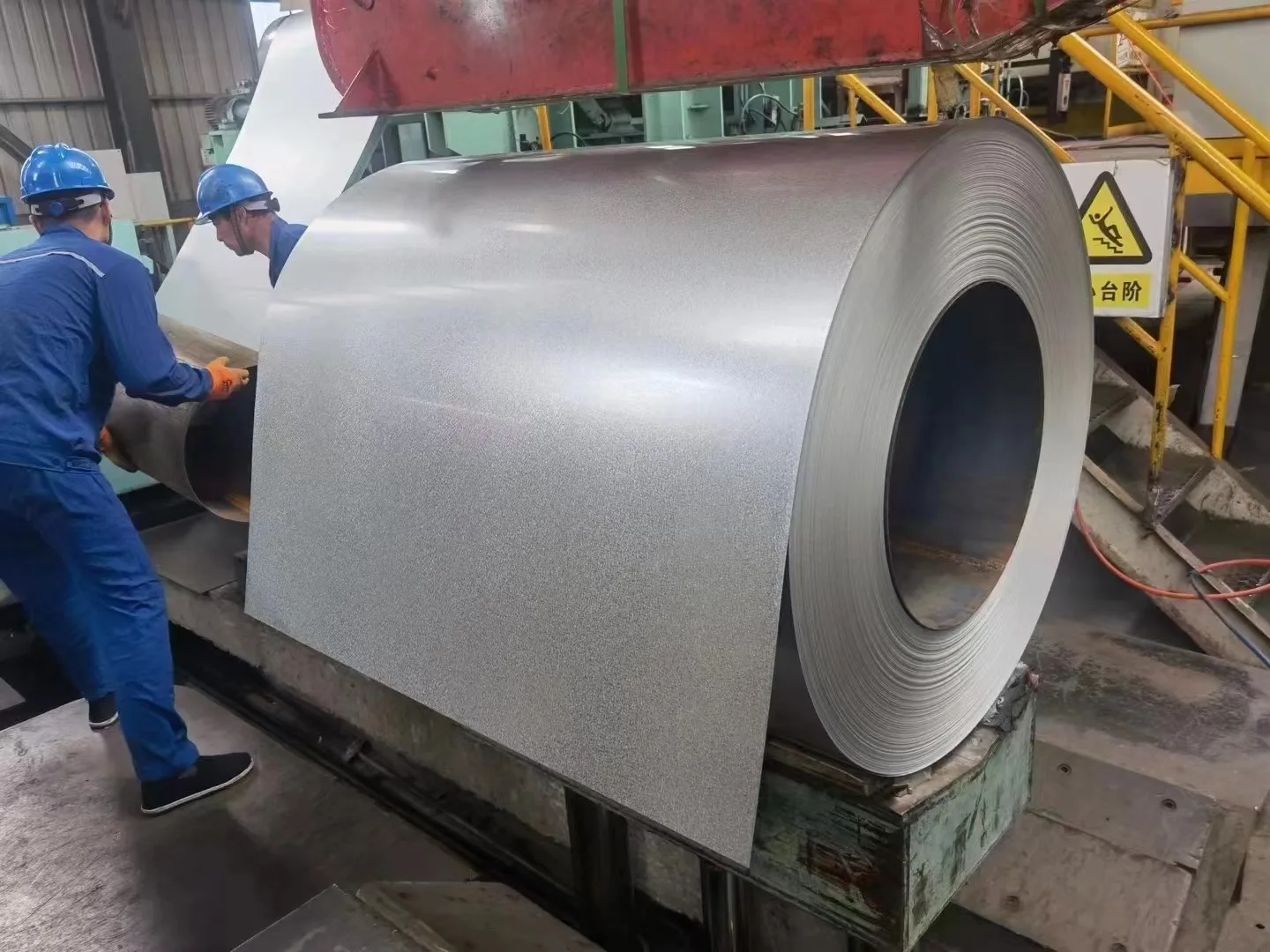
Galvanized Steel Coil vs Galvalume Steel Coil: Which One Should You Choose for Your Project?
Compare galvanized steel coil and Galvalume steel coil in coating composition, corrosion resistance, heat reflectivity, cut-edge protection, applications, cost and buying tips.
A practical and professional guide for comparing galvanized steel coil and Galvalume steel coil in coating composition, corrosion resistance, heat performance, forming behavior, applications, cost and purchasing decisions.
Galvanized steel coil and Galvalume steel coil are two of the most widely used metallic-coated steel products in roofing, wall cladding, construction, appliances, ventilation systems, light steel structures and industrial fabrication. They look similar at first glance, but their coating chemistry, corrosion behavior and ideal applications are not the same.
Galvanized steel coil, often called GI coil, is coated mainly with zinc. Galvalume steel coil, also known as GL coil or Aluzinc steel coil, is coated with an aluminum-zinc-silicon alloy. Both materials protect steel from corrosion, but they protect it in different ways. Understanding this difference helps buyers avoid wrong material selection, unexpected roof failure, color coating problems and unnecessary cost.
This article provides a 100% original comparison of galvanized steel coil and Galvalume steel coil for importers, distributors, roofing sheet manufacturers, contractors and purchasing managers who need a clear answer: which coated steel coil is better for a specific project?
1. Galvanized Steel Coil vs Galvalume Steel Coil: What Is the Quick Answer?
If your project needs strong cut-edge protection, reliable sacrificial zinc behavior and broad availability for general fabrication, galvanized steel coil is often the practical choice. If your project needs better long-term atmospheric corrosion resistance on broad exposed surfaces, higher heat reflectivity and excellent roofing durability, Galvalume steel coil is often more suitable.
However, there is no universal winner. A warehouse roof in a hot inland climate, a household appliance panel, a temporary shed, a coastal roof, a painted roofing sheet and a ventilation duct may require different material decisions. The best choice depends on exposure environment, expected service life, forming method, paint system, budget and local standards.
| Decision Factor | Galvanized Steel Coil | Galvalume Steel Coil |
|---|---|---|
| Coating type | Zinc coating | Aluminum-zinc-silicon alloy coating |
| Broad surface corrosion resistance | Good | Usually better in many atmospheric environments |
| Cut-edge protection | Usually better sacrificial protection | More limited than zinc coating at exposed edges |
| Heat reflectivity | Moderate | Better heat reflectivity |
| Common painted product | PPGI | PPGL |
| Typical advantage | Versatile, economical and easy to process | Long-lasting roof performance and attractive spangle |
2. What Are Galvanized Steel Coil and Galvalume Steel Coil?
Galvanized steel coil is carbon steel coil coated with zinc through a hot-dip galvanizing process or electro-galvanizing process. In roofing and construction markets, hot-dip galvanized steel coil is more common. The zinc layer protects the steel substrate by forming a barrier and by providing sacrificial protection when scratches or cut edges expose the base steel.
Galvalume steel coil is carbon steel coil coated with an aluminum-zinc alloy. A common Galvalume coating composition is approximately 55% aluminum, 43.4% zinc and 1.6% silicon by weight. Aluminum offers strong barrier protection and heat reflectivity, zinc contributes corrosion protection, and silicon helps the alloy layer bond to the steel substrate.
In international trade, galvanized steel coil is often abbreviated as GI coil, while Galvalume steel coil may be called GL coil, Aluzinc coil, AZ coated coil or aluminum-zinc coated steel coil. These terms are important when comparing quotations because they refer to different coating systems.
3. How Are the Coatings Different Between GI Coil and GL Coil?
The core difference between galvanized and Galvalume steel coil is the metallic coating. Galvanized steel uses zinc as the main protective layer. Galvalume uses an aluminum-zinc alloy. This difference changes how each coil resists rust, reflects heat, ages outdoors and reacts after cutting or forming.
| Item | Galvanized Steel Coil | Galvalume Steel Coil |
|---|---|---|
| Main coating element | Zinc | Aluminum-zinc alloy |
| Common coating designation | Z40, Z60, Z80, Z100, Z120, Z180, Z275 | AZ50, AZ70, AZ100, AZ150, AZ185 |
| Protection mechanism | Barrier protection plus strong sacrificial protection | Strong aluminum barrier protection plus zinc-assisted protection |
| Surface appearance | Regular or minimized zinc spangle, matte or bright finish | Silver-gray spangle with aluminum-zinc crystal pattern |
| Typical standard references | ASTM A653, EN 10346, JIS G3302 | ASTM A792, EN 10346, AS 1397 and related specifications |
Zinc is highly active and can protect nearby exposed steel areas. Aluminum is less active but forms a stable barrier layer. Therefore, GI often performs better at edges, scratches and punched holes, while GL often performs better on broad, unbroken surfaces exposed to sunlight, rain and air.
4. Which Has Better Corrosion Resistance: Galvanized or Galvalume Steel Coil?
For broad surface exposure in many normal atmospheric environments, Galvalume steel coil usually provides longer corrosion resistance than galvanized steel coil of comparable coating class. The aluminum-rich coating forms a stable barrier that slows down atmospheric corrosion. This is one reason Galvalume is widely used for long-life metal roofing sheets.
Galvanized steel coil also offers reliable corrosion protection, especially when zinc coating weight is properly selected. It is widely used because it performs well in many general environments, is easy to source and works well in numerous fabrication processes.
Corrosion performance depends on environment
- General rural or inland atmosphere: Galvalume often provides excellent service life on roofing and cladding surfaces.
- Industrial atmosphere: Material selection should consider pollutants, moisture, acid exposure and coating weight.
- Coastal environment: Salt exposure can be demanding for both materials; upgraded coating, paint system and design protection may be required.
- Animal housing or chemical exposure: Ammonia, fertilizer and chemicals can affect metallic coatings; project-specific evaluation is important.
- Frequently wet or poorly drained areas: Design and installation may matter as much as material selection.
The statement "Galvalume is always better" is too simple. Galvalume is excellent for many exposed roof surfaces, but galvanized steel may be better in situations where edges, scratches, deep forming or direct contact with certain materials are major concerns.
5. Which Material Protects Cut Edges and Scratches Better?
Cut-edge protection is one of the most important differences between galvanized steel coil and Galvalume steel coil. Galvanized steel has strong sacrificial zinc protection. When the steel is cut, scratched or punched, zinc near the exposed area can help protect the steel substrate by corroding preferentially.
Galvalume contains zinc, but its aluminum-rich coating works more as a barrier. It performs extremely well when the surface remains intact, but its sacrificial action at exposed edges is generally not as strong as pure zinc coating. This is why careful processing and edge protection are important when using Galvalume in applications with many cut edges or drilled holes.
Practical conclusion
If your product requires many punched holes, complex trimming, exposed cut edges or severe mechanical processing, galvanized steel coil may be easier to manage. If the product is a large roof sheet with limited cutting and good installation practice, Galvalume steel coil can deliver excellent long-term roof performance.
6. Which Performs Better Under Heat and Sunlight?
Galvalume steel coil generally provides better heat reflectivity than galvanized steel coil because of its aluminum-rich surface. This can be valuable for roofing sheets in hot climates, industrial buildings, warehouses and agricultural structures. A reflective roof surface can help reduce heat absorption compared with darker or less reflective materials.
Galvanized steel coil can also be used for roofs and outdoor products, but its zinc surface does not provide the same aluminum-rich reflectivity. When both materials are painted, the top paint color and paint chemistry become major factors. Light colors and high-quality coatings can improve solar reflectance for both PPGI and PPGL roofing sheets.
| Heat-Related Factor | GI Coil | GL Coil |
|---|---|---|
| Unpainted surface reflectivity | Moderate | Generally better |
| Suitability for hot roofing climates | Good with proper coating and design | Very good for many roof applications |
| Painted product influence | Color and paint system strongly affect performance | Color and paint system strongly affect performance |
7. Which Is Easier to Form, Cut and Process?
Both galvanized steel coil and Galvalume steel coil can be slit, cut, roll formed, corrugated, bent and processed into various products. However, forming quality depends on steel grade, coating type, thickness, coating weight, equipment condition and product shape.
Galvanized steel coil is widely used for deep forming and general fabrication because zinc coating is familiar to most processing factories and performs well in many forming operations. Galvalume steel coil can also be formed into roofing sheets and wall panels, but bending radius, tool condition and coating adhesion should be controlled carefully, especially for sharp bends.
Processing considerations
- Choose suitable steel grade and yield strength for the forming process.
- Confirm coating adhesion before producing sharp bends or complex profiles.
- Use proper roll forming equipment to avoid surface scratches.
- Protect cut edges when the final product will be exposed outdoors.
- For pre-painted products, confirm T-bend performance, paint flexibility and surface protection film.
8. Where Should Galvanized Steel Coil and Galvalume Steel Coil Be Used?
Application is the most practical way to choose between GI coil and GL coil. The correct material depends on product design, exposure environment and expected service life.
| Application | Recommended Material | Reason |
|---|---|---|
| General roofing sheets | GI or GL, depending on climate and budget | Both are common; GL is often preferred for longer atmospheric roof exposure |
| Long-life metal roofing | Galvalume steel coil | Strong broad surface corrosion resistance and heat reflectivity |
| Wall cladding | GI or GL | Selection depends on paint system, environment and design life |
| Air ducts and ventilation products | Galvanized steel coil | Good processability, availability and practical zinc protection |
| Appliance panels | Galvanized or pre-painted galvanized steel | Good forming and paint compatibility for many appliance applications |
| Solar mounting or light structures | Galvanized steel coil or heavier galvanized products | Zinc coating and structural requirements are often preferred |
| Heat-reflective roof surfaces | Galvalume steel coil | Aluminum-rich coating provides better reflectivity |
| Products with many exposed cuts | Galvanized steel coil | Better sacrificial protection at cut edges |
For roofing sheet factories, it is common to stock both GI coil and GL coil. GI coil serves economical and general-purpose demand, while GL coil supports higher-performance roofing and cladding orders.
9. How Do GI and GL Compare When Used for PPGI and PPGL?
Galvanized steel coil is the common substrate for PPGI, which means pre-painted galvanized steel. Galvalume steel coil is the common substrate for PPGL, which means pre-painted Galvalume steel. In both products, a paint system is applied over the metallic-coated substrate to provide color, gloss, UV resistance and additional weather protection.
PPGI
PPGI is based on galvanized steel. It is widely used for roofing sheets, wall panels, appliances and general color-coated products. It offers broad availability, color flexibility and economical performance.
PPGL
PPGL is based on Galvalume steel. It is often chosen for roofing and cladding projects that require better outdoor durability, heat reflectivity and long-term appearance.
When comparing PPGI and PPGL, buyers should look at both the substrate and the paint system. A high-quality paint on a poor substrate is not enough. A good substrate with a weak paint system can also fail early. Coating weight, primer, top paint, back paint, pretreatment and curing quality all matter.
| Painted Product | Metallic Substrate | Typical Strength | Common Use |
|---|---|---|---|
| PPGI | Galvanized steel coil | Economical, versatile, easy to source | Roofing, cladding, appliances, doors, panels |
| PPGL | Galvalume steel coil | Better roof weatherability in many environments | Durable roofing, wall panels, architectural cladding |
10. Which Is More Cost-Effective: GI Coil or GL Coil?
Galvanized steel coil is often more economical in initial purchase price, especially in markets where GI production capacity is large and supply is very competitive. Galvalume steel coil may cost more depending on aluminum-zinc alloy prices, coating weight, order quantity and local availability.
However, cost-effectiveness should not be judged by unit price alone. A slightly higher-cost material can be more economical if it extends roof service life, reduces maintenance, improves heat performance or lowers replacement risk. For long-life roofing applications, Galvalume or PPGL may offer better total value. For general fabrication, temporary buildings or products with many cut edges, galvanized steel may be more cost-effective.
Cost factors to evaluate
- Base steel thickness and grade;
- Zinc coating or AZ coating weight;
- Unpainted or pre-painted surface;
- Paint system, color and surface finish;
- Order quantity, coil width and packing method;
- Expected service life and maintenance cost;
- Local climate, project risk and replacement cost.
11. What Specifications Should Buyers Compare Before Ordering?
When comparing quotations for galvanized steel coil and Galvalume steel coil, buyers should confirm that the specifications are truly comparable. A lower price may simply mean lower coating weight, thinner steel, different tolerance, weaker paint system or less protective packing.
| Specification Item | For Galvanized Steel Coil | For Galvalume Steel Coil |
|---|---|---|
| Base steel grade | Commercial quality, structural grade or forming grade | Commercial quality, structural grade or forming grade |
| Thickness | Confirm actual thickness and tolerance | Confirm actual thickness and tolerance |
| Width | Common slit or full coil widths | Common slit or full coil widths |
| Coating designation | Z coating such as Z60, Z100, Z180, Z275 | AZ coating such as AZ50, AZ100, AZ150, AZ185 |
| Surface finish | Regular spangle, minimized spangle, skin-passed, oiled | Regular AZ spangle, anti-fingerprint, oiled or dry |
| Paint system if pre-painted | PE, SMP, HDP, PVDF, primer and back coat details | PE, SMP, HDP, PVDF, primer and back coat details |
| Coil weight | Confirm inner diameter and maximum coil weight | Confirm inner diameter and maximum coil weight |
| Packing | Seaworthy export packing if shipping internationally | Seaworthy export packing if shipping internationally |
Buyers should also request mill test certificates and confirm standards. For project orders, sample approval is recommended before mass production, especially when color, surface appearance or forming performance is critical.
12. How Should You Make the Final Choice Between Galvanized and Galvalume Steel Coil?
The best decision comes from matching material performance with project requirements. Start with the application and environment, then evaluate coating weight, processing method, expected service life and total cost.
Choose galvanized steel coil when:
- You need strong sacrificial zinc protection at cut edges or scratches;
- The product requires frequent cutting, punching or forming;
- The project is cost-sensitive and general corrosion protection is enough;
- The application is ducts, appliances, general panels, frames or light fabrication;
- Your market is familiar with GI coil and requires common zinc coating grades.
Choose Galvalume steel coil when:
- You need better long-term atmospheric resistance on roof or wall surfaces;
- The project is in a hot climate and heat reflectivity is valuable;
- The application is durable metal roofing, cladding or architectural panels;
- You want a distinctive aluminum-zinc surface appearance;
- You are producing PPGL roofing sheets for higher-performance roof systems.
For many distributors, the smartest strategy is not choosing only one material. A complete steel coil supply program may include galvanized steel coil, Galvalume steel coil, PPGI and PPGL so customers can select the right product according to project conditions.
13. Frequently Asked Questions About Galvanized Steel Coil vs Galvalume Steel Coil
Is Galvalume steel coil better than galvanized steel coil?
Galvalume steel coil is often better for long-term atmospheric corrosion resistance on broad exposed roof surfaces, but galvanized steel coil is often better for cut-edge sacrificial protection and general fabrication. The better choice depends on the application.
Can galvanized steel coil and Galvalume steel coil both be painted?
Yes. Galvanized steel coil is commonly used as the substrate for PPGI, while Galvalume steel coil is commonly used as the substrate for PPGL. Paint system quality is important for both materials.
Which is better for roofing sheets?
Galvalume steel coil is often preferred for long-life roofing sheets because of its corrosion resistance and heat reflectivity. Galvanized steel coil is also widely used for economical roofing and projects where zinc protection is suitable.
What is the difference between Z coating and AZ coating?
Z coating refers to zinc coating on galvanized steel, while AZ coating refers to aluminum-zinc alloy coating on Galvalume steel. Common examples include Z100 for galvanized coil and AZ150 for Galvalume coil.
Which material is more economical?
Galvanized steel coil often has a lower initial cost, but Galvalume steel coil may offer better long-term value for roofing and cladding projects that require longer outdoor service life.
Need Help Choosing Galvanized Steel Coil or Galvalume Steel Coil?
Sunsea Steel supplies galvanized steel coil, Galvalume steel coil, PPGI, PPGL and metal roofing sheet materials for international buyers, roofing manufacturers and construction material distributors. If you are comparing GI coil and GL coil for your project, share your thickness, coating weight, application, climate conditions and target budget with our team.
We can help you choose suitable zinc coating, AZ coating, paint system, coil size and export packing for roofing, cladding, industrial fabrication and distribution markets.
Contact Sunsea SteelFrequently Asked Questions
Is Galvalume steel coil better than galvanized steel coil?
Galvalume steel coil is often better for long-term atmospheric corrosion resistance on broad exposed roof surfaces, but galvanized steel coil is often better for cut-edge sacrificial protection and general fabrication. The better choice depends on the application.
Can galvanized steel coil and Galvalume steel coil both be painted?
Yes. Galvanized steel coil is commonly used as the substrate for PPGI, while Galvalume steel coil is commonly used as the substrate for PPGL. Paint system quality is important for both materials.
Which is better for roofing sheets?
Galvalume steel coil is often preferred for long-life roofing sheets because of its corrosion resistance and heat reflectivity. Galvanized steel coil is also widely used for economical roofing and projects where zinc protection is suitable.
What is the difference between Z coating and AZ coating?
Z coating refers to zinc coating on galvanized steel, while AZ coating refers to aluminum-zinc alloy coating on Galvalume steel. Common examples include Z100 for galvanized coil and AZ150 for Galvalume coil.
Which material is more economical?
Galvanized steel coil often has a lower initial cost, but Galvalume steel coil may offer better long-term value for roofing and cladding projects that require longer outdoor service life.