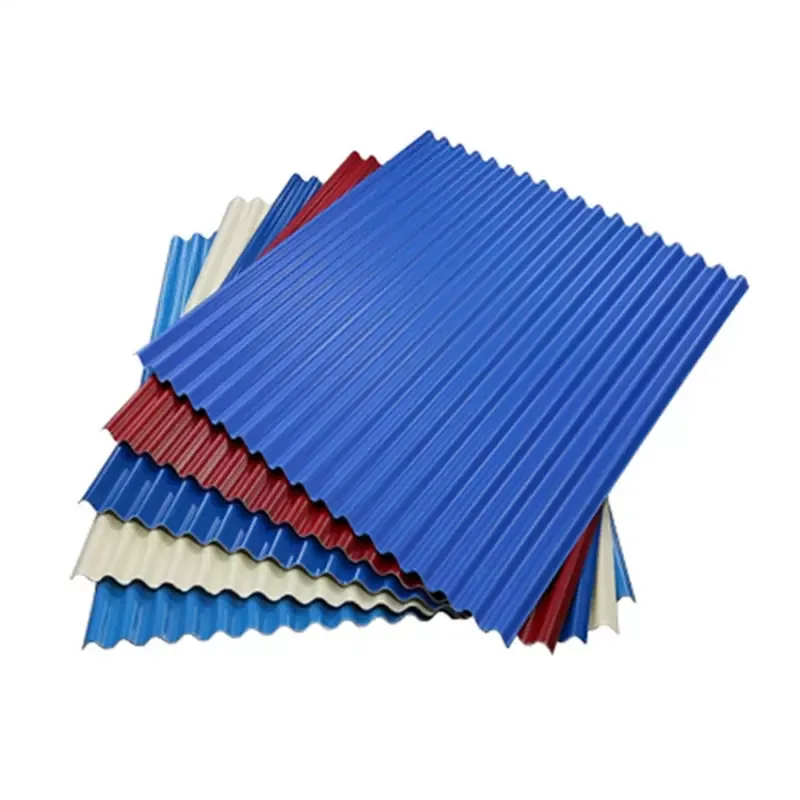
What Is a PPGL Corrugated Roofing Sheet and Why Is It Chosen for Long-Lasting Color Metal Roofs?
PPGL corrugated roofing sheet is a pre-painted Galvalume wave-profile metal roofing material designed for long-lasting color roofs, wall cladding, warehouses, sheds, industrial buildings and construction projects.
A complete guide to pre-painted Galvalume corrugated roofing sheets, including Al-Zn coated substrate, paint systems, color durability, roofing performance, specifications, installation factors and professional buying tips.
PPGL corrugated roofing sheet is a color-coated metal roofing material made from pre-painted Galvalume steel. It combines the atmospheric corrosion resistance of an aluminum-zinc alloy coating, the weather protection of a factory-applied paint system and the strength of a corrugated profile. For roofing distributors, importers, contractors and building material suppliers, it is a practical product for projects that require both long-term durability and attractive appearance.
In the market, this material may also be called pre-painted Galvalume corrugated roofing sheet, pre-painted Aluzinc roofing sheet, color coated Galvalume roof sheet, PPGL roofing sheet or painted aluminum-zinc corrugated sheet. These terms usually refer to the same product family, but the exact performance depends on the substrate, AZ coating weight, paint system, paint thickness, sheet profile, thickness tolerance and installation environment.
This article explains what PPGL corrugated roofing sheet is, how it is produced, why it is used for color metal roof systems and how buyers can choose the right specification for reliable performance.
1. What Is a PPGL Corrugated Roofing Sheet?
A PPGL corrugated roofing sheet is a roof panel produced from pre-painted Galvalume steel. The base steel is first coated with an aluminum-zinc alloy layer, then treated, primed, painted and cured. After the PPGL coil is produced, it is roll formed or pressed into a wave-shaped corrugated roofing sheet.
The term PPGL stands for pre-painted Galvalume. Galvalume steel is commonly coated with an aluminum-zinc-silicon alloy, often around 55% aluminum, 43.4% zinc and 1.6% silicon. The aluminum-rich coating provides barrier protection against atmospheric corrosion, while zinc contributes sacrificial protection and silicon supports coating adhesion.
The corrugated profile adds practical roofing value. It improves sheet rigidity, supports water drainage and allows lightweight steel sheets to cover large roof areas efficiently. When combined with a durable paint system, PPGL corrugated roofing sheet becomes a strong option for color metal roofs in many construction markets.
2. What Is the Material Structure of PPGL Corrugated Roofing Sheet?
The performance of a PPGL corrugated roofing sheet comes from its multi-layer structure. Each layer has a specific function, and weak control of one layer can reduce the durability of the whole roof panel.
| Layer | Main Function | Importance for Roofing |
|---|---|---|
| Steel substrate | Provides strength, formability and dimensional stability | Affects panel rigidity, roll forming behavior and roof load performance |
| Aluminum-zinc coating | Protects the steel through barrier and sacrificial mechanisms | Improves atmospheric corrosion resistance and long-term roof durability |
| Chemical pretreatment | Improves adhesion between metallic coating and paint | Helps prevent peeling, blistering and coating failure |
| Primer | Creates bonding layer and additional corrosion protection | Supports paint system stability during forming and outdoor exposure |
| Top coat | Provides color, gloss, UV resistance and weather protection | Directly affects roof appearance, color retention and service life |
| Back coat | Protects the underside of the sheet | Helps resist condensation, handling marks and underside corrosion |
Because the product is painted under factory-controlled conditions before corrugation, PPGL roofing sheets can achieve consistent color, stable coating thickness and efficient large-scale production.
3. How Is PPGL Corrugated Roofing Sheet Produced?
The production of PPGL corrugated roofing sheet usually involves two major stages: making the PPGL coil and forming the coil into corrugated sheets.
Stage one: producing PPGL coil
- Galvalume substrate selection: The steel mill selects the proper base steel grade, thickness, width and AZ coating weight.
- Cleaning: The metallic-coated surface is cleaned to remove oil, dust and contaminants.
- Pretreatment: A chemical treatment is applied to support coating adhesion and corrosion resistance.
- Primer coating: Primer is applied and cured to create a stable bonding layer.
- Top and back coating: The front side receives color paint, while the back side receives a protective back coat.
- Curing: The coated strip passes through ovens to form a durable paint film.
- Recoiling: The finished PPGL coil is wound and prepared for profiling or shipment.
Stage two: forming corrugated roofing sheets
- The PPGL coil is loaded onto a roll forming line.
- The strip passes through profile rollers to create the wave shape.
- The formed sheet is cut to the required length.
- Sheets are stacked, protected and packed for delivery.
Good forming control is important because excessive stress, poor roller alignment or improper cutting can damage the paint film or create profile inconsistency.
4. Why Is PPGL Corrugated Roofing Sheet Chosen for Long-Lasting Color Metal Roofs?
PPGL corrugated roofing sheet is selected for many roof projects because it offers a strong combination of appearance, durability and practical installation performance.
Strong atmospheric corrosion resistance
The Galvalume substrate provides excellent resistance to many atmospheric environments, especially on broad exposed roof surfaces.
Attractive color finish
Factory-applied paint provides stable color, gloss and architectural appearance for residential, commercial and industrial roofs.
Lightweight but rigid profile
The corrugated wave structure increases stiffness while keeping the sheet lightweight and easy to transport.
Efficient installation
Large sheet coverage, customized length and simple fastening help reduce construction time for many roofing projects.
Additional advantages
- Good heat reflectivity compared with many dark or heavy roof materials;
- Wide color options, including RAL colors and customized samples;
- Suitable for roofing and wall cladding;
- Compatible with ridge caps, flashing, gutters and other roof accessories;
- Good long-term value when the correct coating system is selected;
- Efficient export supply in bundles or customized packages.
5. Which Paint Systems Are Common for PPGL Corrugated Roofing Sheets?
The paint system determines color stability, UV resistance, flexibility and outdoor weathering performance. For PPGL roofing sheets, buyers should confirm both paint type and paint thickness instead of selecting only by color.
| Paint System | Main Features | Typical Application |
|---|---|---|
| PE polyester | Cost-effective, good general color performance, wide market availability | General roofing, wall cladding, economical construction projects |
| SMP silicon modified polyester | Improved weather resistance and color retention compared with standard PE | Outdoor roofs requiring better durability |
| HDP high durability polyester | Good UV resistance, better long-term color stability and weatherability | Commercial, industrial and high-sunlight roofing projects |
| PVDF | Excellent weather resistance, color retention and chemical stability | Premium architectural roofs and demanding environments |
For a mild environment, PE may be sufficient. For high sunlight, coastal humidity, industrial pollution or longer service life requirements, upgraded coatings such as SMP, HDP or PVDF should be considered.
6. What Does AZ Coating Mean in PPGL Corrugated Roofing Sheet?
Because PPGL is based on Galvalume steel, its metallic coating is usually described with an AZ designation. Examples include AZ50, AZ70, AZ100, AZ150 and AZ185. The number generally indicates the total aluminum-zinc coating mass on both sides of the sheet in grams per square meter.
| Application Environment | Suggested AZ Coating | Selection Notes |
|---|---|---|
| Indoor panels or short-term use | AZ50-AZ70 | Suitable for low-corrosion applications with controlled exposure |
| General color roofing | AZ100-AZ150 | Common choice for many roofing and wall cladding projects |
| Longer-life outdoor roof systems | AZ150-AZ185 | Better durability for wider atmospheric exposure |
| Severe or project-specific environments | Engineering evaluation required | May require upgraded paint, special design or alternative protection |
AZ coating improves the corrosion resistance of the substrate, but it is not the only factor. Paint system, edge protection, roof slope, drainage and installation quality also affect roof service life.
7. How Does the Corrugated Profile Support Roof Performance?
The corrugated profile is a repeating wave pattern that gives the sheet higher rigidity and better drainage than a flat sheet. This makes PPGL corrugated roofing sheet suitable for lightweight roof structures and large-area coverage.
Main functions of corrugation
- Improved stiffness: The wave shape increases bending resistance without greatly increasing weight.
- Efficient water flow: Corrugation channels guide rainwater down the roof slope.
- Easy overlapping: Side laps and end laps can be designed for weather protection.
- Traditional market acceptance: Corrugated roofing has a familiar appearance in many regions.
- Flexible use: The same sheet type can often be used for roof panels, wall panels and fences.
Wave height, pitch, effective width and sheet length should be confirmed before ordering because they influence installation quantity, roof strength and water drainage performance.
8. Where Are PPGL Corrugated Roofing Sheets Used?
PPGL corrugated roofing sheets are used in many building types where appearance, corrosion resistance and lightweight construction are important.
Residential roof systems
Homeowners and builders use PPGL corrugated sheets for houses, garages, carports, extensions and small roof structures. The color coating provides a clean architectural appearance.
Industrial buildings
Factories, workshops, warehouses and logistics buildings often require large roof areas. PPGL corrugated roofing sheets provide efficient coverage, good durability and practical installation.
Agricultural structures
Farm storage buildings, barns, livestock shelters and rural sheds use corrugated metal roofing because it is lightweight, economical and easy to maintain.
Commercial and public buildings
Markets, small retail buildings, canopies, parking shelters and public service structures can use PPGL sheets for durable color roofing.
Wall cladding and enclosure systems
PPGL corrugated sheets are also used as wall cladding, partitions, fence panels and building envelope materials, especially when color appearance is important.
9. What Specifications Should Buyers Confirm Before Ordering?
A professional purchase order should clearly define the technical requirements. Without accurate specifications, two products with similar appearance may have very different performance and cost.
| Specification Item | Common Options | Why It Matters |
|---|---|---|
| Thickness | 0.20 mm to 0.80 mm or customized | Affects strength, weight, cost and roof span capability |
| Width | Coil width and effective sheet width | Determines coverage area and installation planning |
| Length | Cut to project requirement | Reduces site cutting and improves roof alignment |
| AZ coating | AZ50, AZ70, AZ100, AZ150, AZ185 | Influences corrosion protection of the Galvalume substrate |
| Paint type | PE, SMP, HDP, PVDF | Controls weather resistance, UV performance and color retention |
| Paint thickness | Common front paint 15-25 microns or customized | Affects surface durability and long-term appearance |
| Color | RAL color or custom sample | Ensures architectural appearance and batch consistency |
| Corrugated profile | Wave height, pitch, shape and effective width | Affects stiffness, drainage and installation compatibility |
| Packaging | Bundle packing, waterproof paper, steel straps, pallet options | Protects sheets during handling, export and storage |
10. How Does PPGL Corrugated Roofing Sheet Compare with PPGI and Other Roofing Sheets?
PPGL corrugated roofing sheet is often compared with PPGI roofing sheet, Galvalume roofing sheet and galvanized corrugated sheet. Each product has its own strengths.
| Material | Main Advantage | Possible Limitation | Best Fit |
|---|---|---|---|
| PPGL corrugated roofing sheet | Color finish plus Galvalume substrate corrosion resistance | Cut-edge protection should be evaluated carefully | Long-lasting color roofs, wall panels and architectural metal buildings |
| PPGI corrugated roofing sheet | Color finish with galvanized substrate and good general availability | Atmospheric corrosion performance depends on zinc coating and paint system | Economical color roofing and common construction projects |
| Galvalume corrugated roofing sheet | Metallic Al-Zn surface with strong atmospheric corrosion resistance | No color coating unless painted | Unpainted metal roofs and industrial building panels |
| Galvanized corrugated roofing sheet | Good zinc-based protection and simple metallic finish | Limited color appearance and weathering design flexibility | Functional roofs, sheds and cost-sensitive applications |
PPGL is often preferred when buyers want color appearance and enhanced atmospheric corrosion resistance from the Al-Zn substrate. PPGI may be selected when galvanized substrate behavior, availability or price is more important. The final decision should be based on environment, design, budget and expected service life.
11. How Can Buyers Judge the Quality of PPGL Corrugated Roofing Sheets?
Quality evaluation should consider the PPGL coil and the finished corrugated sheet. A good-looking color surface does not always mean the product has reliable long-term performance.
Important quality checkpoints
- Color consistency: Sheets should have stable color and gloss across the same batch.
- Paint adhesion: Coating should resist peeling, cracking and delamination during forming and handling.
- AZ coating weight: Metallic coating should match the contract requirement and inspection certificate.
- Paint thickness: Front and back coating thickness should be verified when required.
- Surface condition: Check for scratches, stains, bubbles, pinholes, roll marks and edge damage.
- Profile accuracy: Wave height, pitch and effective width should match the drawing or sample.
- Length accuracy: Proper cutting helps ensure smooth roof installation.
- Packaging strength: Export packaging should protect sheets from moisture, scratches and deformation.
A reliable supplier should be able to provide product specifications, inspection data, packing photos and clear communication before shipment.
12. What Installation Details Affect the Service Life of PPGL Corrugated Roofing Sheets?
Correct installation is essential for roof durability. Even a high-quality PPGL sheet may perform poorly if roof slope, overlap, fastening or drainage is not properly designed.
Roof slope and drainage
A suitable slope allows water to drain quickly. Low slope roofs may require special overlap design, sealant or different panel systems to prevent water penetration.
Side lap and end lap
Overlaps should follow local weather conditions and roofing practice. Areas with heavy rain or strong wind may need larger laps and additional sealing.
Fastener compatibility
Roofing screws should be compatible with metal roofing sheets and include sealing washers. Incorrect fasteners can damage coating or cause leakage.
Cut edge management
Cut edges expose the layered material. Clean cutting, careful handling and correct installation orientation can help reduce corrosion risks.
Surface protection during installation
Workers should avoid dragging sheets, dropping tools or walking on unsupported areas. Scratches should be repaired according to coating recommendations.
Ventilation and condensation control
In enclosed buildings, condensation may form under the roof. Proper ventilation, insulation and vapor control help protect the roof system.
13. How Should Importers and Contractors Buy PPGL Corrugated Roofing Sheets?
For professional procurement, buyers should not simply ask for the cheapest color roofing sheet. The order should define the product clearly and match the specification with the real project environment.
Questions to ask a supplier
- What is the base steel grade and thickness tolerance?
- What AZ coating weight is used for the Galvalume substrate?
- What paint system is available: PE, SMP, HDP or PVDF?
- What are the front and back coating thicknesses?
- Can the supplier provide RAL colors or color sample matching?
- What corrugated profile, wave height and effective width are available?
- Can sheet length be customized according to the roof design?
- What export packaging is used?
- Can the supplier provide mill test certificate and coating information?
- Can pre-shipment inspection or photos be arranged?
Professional buying tip
For PPGL corrugated roofing sheets, focus first on AZ coating weight, paint system, paint thickness and profile accuracy. These details directly affect durability, appearance and installation performance.
14. Which Standards Are Commonly Related to PPGL Roofing Sheets?
PPGL corrugated roofing sheets may be supplied according to different international or regional standards. Standards can relate to the metallic-coated substrate, organic coating and finished sheet tolerances.
- ASTM A792: Common standard for steel sheet with 55% aluminum-zinc alloy coating.
- ASTM A755: Common reference for pre-painted metallic-coated steel sheet.
- EN 10346: European standard for continuously hot-dip coated steel flat products.
- EN 10169: European standard for continuously organic coated steel flat products.
- JIS G3322: Japanese standard related to pre-painted hot-dip 55% aluminum-zinc alloy-coated steel sheets and coils.
- AS 1397: Australian standard for steel sheet and strip coated with zinc, aluminum-zinc and other metallic coatings.
Because standards differ in designation, tolerances and testing methods, the required standard should be clearly stated in the purchase contract.
15. How Should PPGL Corrugated Roofing Sheets Be Stored and Handled?
Proper storage and handling help keep the color surface and roofing performance in good condition before installation.
- Store sheets in a dry, clean and ventilated area.
- Protect bundles from rain, condensation and standing water.
- Do not place sheets directly on wet ground.
- Keep packaging intact until installation.
- Avoid dragging sheets against each other.
- Use clean gloves to reduce fingerprints and surface marks.
- Use suitable lifting equipment for long sheets.
- Inspect opened bundles and install sheets as soon as practical.
For export orders, waterproof wrapping, secure bundling, edge protection and careful container loading help prevent transportation damage.
Frequently Asked Questions About PPGL Corrugated Roofing Sheets
Is PPGL corrugated roofing sheet suitable for outdoor roofs?
Yes. PPGL corrugated roofing sheet is widely used for outdoor metal roofs. The correct AZ coating, paint system, sheet thickness, profile and installation method should be selected according to the local environment.
What is the difference between PPGL and PPGI corrugated roofing sheet?
PPGL uses a pre-painted Galvalume substrate with aluminum-zinc coating, while PPGI uses a pre-painted galvanized substrate with zinc coating. PPGL often provides strong atmospheric corrosion resistance, while PPGI may provide different cut-edge behavior and wide market availability.
What does AZ150 mean in PPGL roofing sheet?
AZ150 means the total aluminum-zinc alloy coating mass on both sides of the steel sheet is approximately 150 g/m². It is a common specification for many roofing and wall cladding applications.
Which paint system is best for PPGL corrugated roofing sheet?
PE is common for general use, while SMP, HDP and PVDF offer better weather resistance and color retention. The best paint system depends on sunlight exposure, humidity, pollution level, budget and expected service life.
Can PPGL corrugated sheets be used for wall cladding?
Yes. PPGL corrugated sheets can be used for wall cladding, fence panels, partitions and building envelopes. Color consistency, profile direction and fastening method should be considered.
Does PPGL roofing sheet rust?
PPGL roofing sheet has corrosion protection from the aluminum-zinc coating and paint layers, but it is not completely immune to corrosion. Cut edges, scratches, trapped moisture and severe environments may still cause corrosion over time.
What thickness is commonly used for PPGL corrugated roofing sheets?
Common thickness varies by market and roof design, but many roofing projects use sheets between 0.25 mm and 0.60 mm. Wind load, roof span, profile shape and local requirements should be considered.
What information should I provide for a quotation?
You should provide thickness, width, length, corrugated profile, AZ coating, paint type, color, quantity, packaging requirement, destination port and intended application. Clear details help the supplier quote accurately.
Conclusion: Is PPGL Corrugated Roofing Sheet the Right Material for Your Roof Project?
PPGL corrugated roofing sheet is a high-value color metal roofing material that combines the corrosion resistance of Galvalume steel, the appearance and weather protection of a factory-applied paint system and the structural benefits of a corrugated profile. It is suitable for residential roofs, industrial buildings, warehouses, agricultural structures, commercial projects and wall cladding systems.
The best performance depends on choosing the right specification. Buyers should carefully confirm steel thickness, AZ coating weight, paint type, paint thickness, color, corrugated profile, sheet length, packaging and supplier quality control.
When properly selected, transported and installed, PPGL corrugated roofing sheet can provide attractive color appearance, reliable roof durability, efficient construction and strong long-term value for modern metal building projects.
Need PPGL Corrugated Roofing Sheets for Your Market or Project?
Sunsea Steel can support buyers with pre-painted Galvalume corrugated roofing sheets in customized thickness, color, AZ coating, paint system, profile and export packaging. Whether you need materials for roofing distributors, construction projects, warehouses or wall cladding, we can help you match the right specification to your application.
Contact Sunsea SteelFrequently Asked Questions
Is PPGL corrugated roofing sheet suitable for outdoor roofs?
Yes. PPGL corrugated roofing sheet is widely used for outdoor metal roofs. The correct AZ coating, paint system, sheet thickness, profile and installation method should be selected according to the local environment.
What is the difference between PPGL and PPGI corrugated roofing sheet?
PPGL uses a pre-painted Galvalume substrate with aluminum-zinc coating, while PPGI uses a pre-painted galvanized substrate with zinc coating. PPGL often provides strong atmospheric corrosion resistance, while PPGI may provide different cut-edge behavior and wide market availability.
What does AZ150 mean in PPGL roofing sheet?
AZ150 means the total aluminum-zinc alloy coating mass on both sides of the steel sheet is approximately 150 g/m². It is a common specification for many roofing and wall cladding applications.
Which paint system is best for PPGL corrugated roofing sheet?
PE is common for general use, while SMP, HDP and PVDF offer better weather resistance and color retention. The best paint system depends on sunlight exposure, humidity, pollution level, budget and expected service life.
Can PPGL corrugated sheets be used for wall cladding?
Yes. PPGL corrugated sheets can be used for wall cladding, fence panels, partitions and building envelopes. Color consistency, profile direction and fastening method should be considered.
Does PPGL roofing sheet rust?
PPGL roofing sheet has corrosion protection from the aluminum-zinc coating and paint layers, but it is not completely immune to corrosion. Cut edges, scratches, trapped moisture and severe environments may still cause corrosion over time.
What thickness is commonly used for PPGL corrugated roofing sheets?
Common thickness varies by market and roof design, but many roofing projects use sheets between 0.25 mm and 0.60 mm. Wind load, roof span, profile shape and local requirements should be considered.
What information should I provide for a quotation?
You should provide thickness, width, length, corrugated profile, AZ coating, paint type, color, quantity, packaging requirement, destination port and intended application. Clear details help the supplier quote accurately.