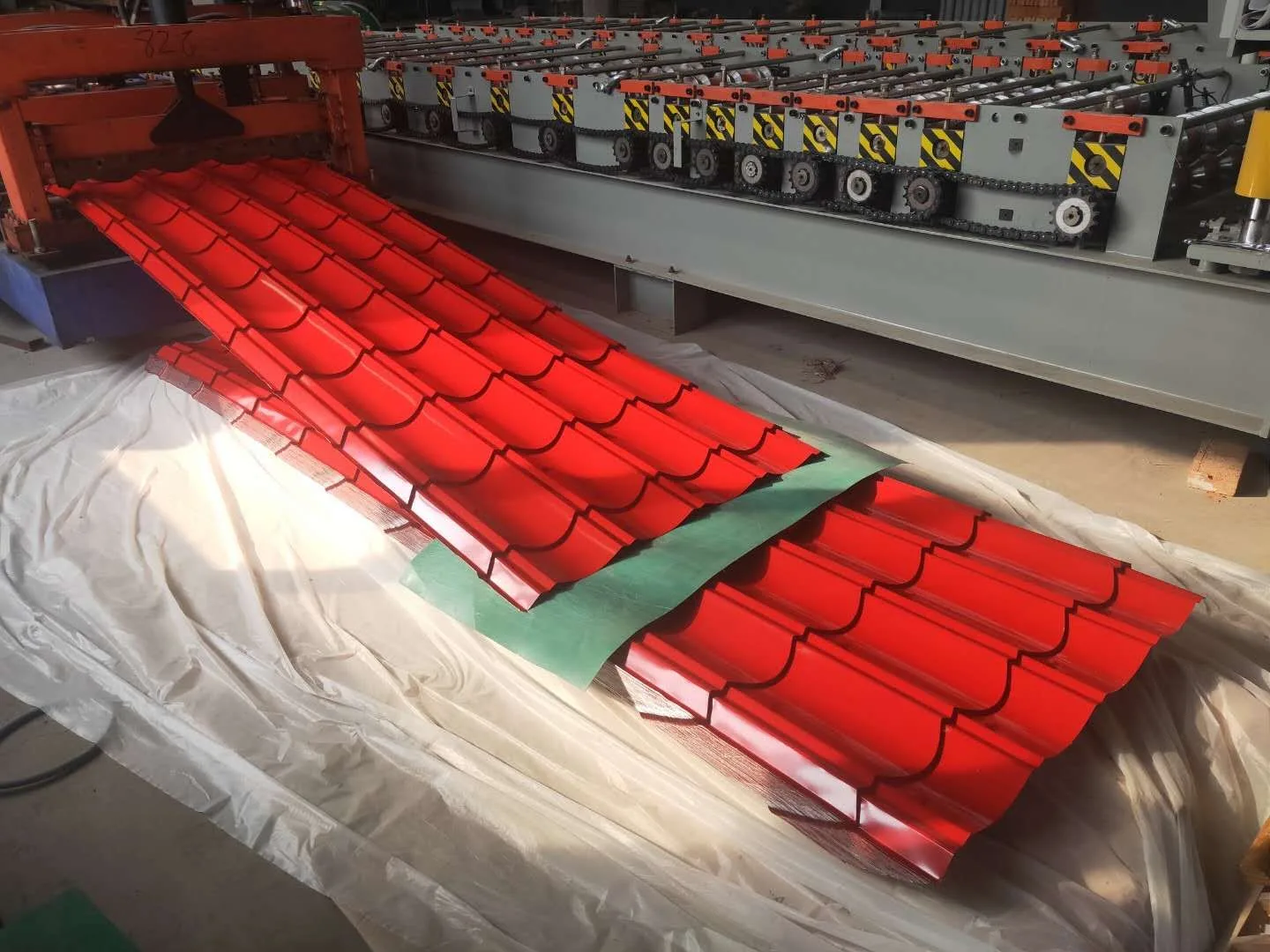
What Is a PPGL Ridge Cap Roofing Sheet and Why Is It Essential for Metal Roof Protection?
A professional guide to PPGL ridge cap roofing sheets, covering material structure, ridge protection, profiles, coating systems, specifications, installation details and buying tips.
A complete guide to pre-painted Galvalume ridge cap roofing sheets, including material structure, ridge protection, coating selection, common shapes, specifications, installation details and buying advice for roofing contractors, importers and building material distributors.
A PPGL ridge cap roofing sheet, also called a PPGL roof ridge tile or pre-painted Galvalume ridge cap, is a formed metal roofing accessory used to cover and protect the highest joint where two roof slopes meet. Although it may look like a simple finishing component, it plays a critical role in waterproofing, wind resistance, ventilation design, roof appearance and the long-term durability of a metal roofing system.
For industrial buildings, warehouses, residential houses, agricultural sheds, prefabricated structures and commercial roofs, the ridge area is one of the most vulnerable parts of the roof envelope. Rainwater, wind-driven moisture, dust and heat movement can all affect this joint. A well-made PPGL ridge cap roofing sheet closes the exposed gap, guides water away from the roof peak and creates a neat visual transition between roof panels.
This original SEO guide explains what PPGL ridge cap roofing sheets are, why pre-painted Galvalume steel is widely used for ridge caps, how to select the right profile and coating, and what buyers should confirm before placing an order.
1. What Is a PPGL Ridge Cap Roofing Sheet?
A PPGL ridge cap roofing sheet is a pre-painted Galvalume steel component formed into a ridge-covering shape. It is installed at the top line of a sloped roof where two roof planes meet. Its main purpose is to cover the roof joint, prevent water entry, improve wind resistance and complete the appearance of the roofing system.
PPGL means pre-painted Galvalume steel. It uses a steel substrate protected by an aluminum-zinc metallic coating and then finished with a factory-applied paint system. The material is cut and bent or roll formed into a ridge cap shape that matches the roof panel profile, roof pitch and building design.
In many markets, the product may also be called a color coated ridge cap, metal roof ridge tile, roof cap flashing, roof ridge cover, PPGL ridge tile or Galvalume ridge sheet. Although the names vary, the product belongs to the roofing accessory system and should be selected together with the main roofing sheets.
2. Why Is a Ridge Cap Roofing Sheet Important for a Metal Roof?
The ridge is usually the highest horizontal line on a roof. Because it sits at the meeting point of two slopes, it is exposed to wind uplift, rain impact, temperature changes and possible movement between roof panels. Without a proper ridge cap, water can enter the roof space, insulation can become damp and the roof structure can lose long-term reliability.
Main functions of PPGL ridge caps
- Waterproofing: The ridge cap covers the gap between roof sheets and directs rainwater onto the roof surface.
- Wind protection: Correct overlap and fastening help reduce wind-driven lifting at the roof peak.
- Dust and debris control: The cap helps block dust, leaves and insects from entering the roof cavity.
- Ventilation compatibility: With proper accessories, it can work with ridge ventilation systems.
- Finished appearance: It creates a neat, continuous roof line and improves the overall building appearance.
- System durability: It helps protect screws, laps, edges and exposed joints from direct weather exposure.
For large industrial or agricultural roofs, ridge cap failure can cause leakage in a wide area. For residential and architectural roofs, poor ridge finishing also reduces visual quality. This is why buyers should not treat ridge caps as secondary accessories.
3. What Is the Material Structure of PPGL Ridge Cap Roofing Sheet?
PPGL ridge cap roofing sheet is not a single-layer painted sheet. It is a multi-layer steel product designed for outdoor exposure, forming performance and long-term color appearance.
| Layer | Main Function | Importance for Ridge Caps |
|---|---|---|
| Steel substrate | Provides mechanical strength and formability | Allows bending, pressing and forming without cracking |
| Aluminum-zinc coating | Protects steel from atmospheric corrosion | Important because ridge caps are highly exposed to weather |
| Pretreatment layer | Improves bonding between metallic coating and paint | Helps prevent paint peeling after forming |
| Primer coating | Enhances corrosion protection and adhesion | Supports coating stability at bends and edges |
| Top paint | Provides color, gloss, UV resistance and weather protection | Determines visible appearance and color retention |
| Back coating | Protects the underside of the accessory | Reduces underside corrosion caused by condensation |
The aluminum-zinc coating of Galvalume steel usually combines aluminum barrier protection with zinc sacrificial protection. This makes PPGL a strong choice for exposed roof accessories where both corrosion resistance and color appearance are required.
4. Which PPGL Ridge Cap Shapes Are Common?
Ridge caps can be produced in different shapes to match roof design, roof pitch and local market preferences. The best shape depends on the roofing sheet profile, building style, required overlap and installation method.
Plain Ridge Cap V-Shaped Ridge Cap Round Ridge Cap Three-Fold Ridge Cap Tile Effect Ridge Cap Ventilated Ridge Cap Custom Flashing
| Ridge Cap Type | Shape Description | Typical Application |
|---|---|---|
| Plain ridge cap | Simple angled sheet bent along the center line | Cost-effective roofing systems and general metal roofs |
| V-shaped ridge cap | Clear center angle with two sloped wings | Industrial roofs, warehouses and high-slope roof systems |
| Round ridge cap | Curved top shape with smoother appearance | Residential roofs, decorative roofs and some tile-style designs |
| Three-fold ridge cap | Multiple bends for improved rigidity and edge control | Projects requiring better shape stability and neat lines |
| Tile effect ridge cap | Pressed or stepped shape matching tile effect roofing sheets | Villas, houses, resorts and architectural metal roofs |
| Ventilated ridge cap | Designed to work with ventilation strips or ridge vents | Roofs needing moisture control and attic ventilation |
Selection tip
The ridge cap should match the main roof sheet profile, roof slope and color. For example, a PPGL tile effect roof usually needs a decorative matching ridge tile, while an industrial trapezoidal roof may use a straight V-shaped or multi-fold ridge cap.
5. How Is a PPGL Ridge Cap Roofing Sheet Produced?
The production of PPGL ridge caps begins with pre-painted Galvalume steel coil. The coil is slit, cut, bent, pressed or roll formed into the required ridge cap shape. Because ridge caps often have bends and edges, coating flexibility and forming accuracy are essential.
- Substrate selection: Proper steel grade, thickness, width and AZ coating weight are selected according to project requirements.
- Color coating: Galvalume coil is pretreated, primed, painted and cured into PPGL coil.
- Slitting or cutting: The coil is cut to the required blank width for ridge cap forming.
- Forming or bending: The blank is shaped into V, round, three-fold, tile effect or customized ridge profiles.
- Length cutting: Ridge caps are cut to standard or customized lengths.
- Inspection: Dimensions, color, coating surface, bend quality and packing are checked.
- Packing: Finished pieces are stacked, protected with film or paper if required and packed for export shipment.
For export orders, accurate packing is important because ridge caps can be scratched or deformed during transportation if protection is insufficient. Bundles should be stable, moisture-resistant and easy to unload.
6. Why Choose PPGL Ridge Cap Roofing Sheets?
PPGL ridge caps are widely used because they offer a practical balance of corrosion resistance, appearance, formability and compatibility with color-coated metal roofs.
Strong weather resistance
The Galvalume substrate provides reliable resistance to atmospheric corrosion, especially on exposed roof areas.
Attractive color matching
The pre-painted surface can match or contrast with PPGL roofing sheets in many RAL colors and finishes.
Lightweight roof finishing
Compared with clay or concrete ridge tiles, PPGL ridge caps are lighter and easier to handle on site.
Flexible customization
Thickness, width, length, angle, shape, color and packing can be adjusted for different roofing projects.
- Suitable for industrial, residential, agricultural and commercial metal roofs;
- Compatible with corrugated, trapezoidal, tile effect, T profile and ribbed roofing sheets;
- Can be produced in matching roof colors for consistent building appearance;
- Easy to transport, cut, install and replace compared with heavy ridge materials;
- Good option for importers supplying complete roofing systems.
7. Which Paint Systems Are Available for PPGL Ridge Cap Roofing Sheets?
The paint system affects the ridge cap's color retention, gloss stability, UV resistance, chalking resistance and overall outdoor service life. Buyers should choose paint based on climate, project value and expected durability.
| Paint System | Main Features | Recommended Use |
|---|---|---|
| PE polyester | Economical, wide color range and good general performance | Standard roofing projects and cost-sensitive orders |
| SMP silicon modified polyester | Better weatherability and color retention than standard PE | Outdoor roofs requiring improved durability |
| HDP high durability polyester | Good UV resistance and stronger long-term exterior performance | Industrial and commercial roofs in strong sunlight areas |
| PVDF | Excellent color stability, weatherability and chemical resistance | Premium architectural roofs and demanding environments |
For ridge caps, bend areas are important. The selected coating should have enough flexibility to resist cracking during forming. Buyers should also confirm top paint thickness, back paint thickness, gloss level and protective film requirements.
8. What Specifications Should Buyers Confirm Before Ordering?
Because ridge caps must match roof panels and roof geometry, buyers should confirm more than color and thickness. A small dimensional mismatch can create installation problems, water leakage or poor appearance.
| Specification Item | Common Options or Notes | Why It Matters |
|---|---|---|
| Base material | PPGL / pre-painted Galvalume steel | Determines corrosion resistance and coating compatibility |
| Thickness | Commonly 0.25 mm to 0.60 mm, customized by order | Affects rigidity, forming and installation strength |
| AZ coating | AZ50, AZ70, AZ100, AZ150 or project-specific | Influences long-term corrosion resistance |
| Paint system | PE, SMP, HDP, PVDF | Affects outdoor color and weather performance |
| Color | RAL color or sample-matched color | Ensures roof system appearance consistency |
| Ridge angle | Customized according to roof pitch | Ensures proper fit at the roof peak |
| Width and wing length | Based on roof panel profile and overlap design | Controls coverage, waterproofing and fastening position |
| Length | Standard or customized length | Affects installation efficiency and lap quantity |
| Shape | V-shaped, round, three-fold, tile effect or custom | Must match roofing profile and market preference |
| Packing | Export bundles, film protection, pallet or wooden support | Prevents scratches and deformation during shipment |
If the buyer already has roofing sheet drawings, roof pitch data or samples, these should be shared with the supplier before production. Accurate information helps reduce adjustment during installation.
9. What Installation Details Matter for PPGL Ridge Cap Roofing Sheets?
Even a high-quality PPGL ridge cap may fail if it is installed incorrectly. The ridge cap should be installed after the main roof sheets are fixed and aligned. The installer must check roof slope, ridge line straightness, overlap direction and fastener placement.
Important installation points
- Correct overlap: Ridge caps should overlap enough to prevent wind-driven rain from entering the joint.
- Proper fasteners: Use suitable roofing screws, sealing washers and corrosion-compatible accessories.
- Accurate alignment: Keep the ridge line straight for both appearance and drainage performance.
- Sealant or foam closure: Use closure strips, butyl tape or sealant where required by roof design.
- Avoid over-tightening: Excessive screw pressure can deform the cap or damage sealing washers.
- Protect cut edges: Cutting and drilling should be managed carefully to reduce corrosion risk at exposed edges.
- Consider ventilation: If the roof requires airflow, use a compatible ventilated ridge system.
For coastal, high-wind or heavy-rain areas, installation design should be reviewed carefully. Fastener spacing, lap length and sealing materials may need to be upgraded to meet local conditions.
10. How Does PPGL Ridge Cap Compare with Other Ridge Cap Materials?
Ridge caps can be made from different materials, including galvanized steel, Galvalume steel, PPGL, PPGI, aluminum, clay, concrete and plastic. PPGL is often selected when buyers need a metal accessory with strong corrosion resistance and an attractive factory-coated finish.
| Material | Main Strength | Possible Limitation | Typical Use |
|---|---|---|---|
| PPGL ridge cap | Good corrosion resistance, color finish and lightweight installation | Requires correct coating selection for severe environments | Color metal roofs, industrial roofs and export roofing systems |
| PPGI ridge cap | Economical color-coated steel option | Corrosion performance depends on zinc coating and environment | General roofing and wall accessory systems |
| Galvanized ridge cap | Simple metallic protection and lower cost | No factory color finish unless painted later | Utility buildings, temporary roofs and economical projects |
| Aluminum ridge cap | Lightweight and naturally corrosion resistant | Usually higher material cost and different strength behavior | Special architectural or corrosion-sensitive projects |
| Clay or concrete ridge tile | Traditional appearance and heavy roofing compatibility | Heavier, more fragile and less suitable for lightweight steel roofs | Traditional tile roofing systems |
For buyers already using PPGL roofing sheets, PPGL ridge caps provide better color matching and system consistency than mixing different materials.
11. How to Inspect the Quality of PPGL Ridge Cap Roofing Sheets?
Quality inspection should cover both the material and the finished shape. Since ridge caps are visible and exposed, defects can affect appearance and roof performance at the same time.
Quality checklist
- Surface appearance: Check for scratches, dents, color differences, stains, pinholes and coating defects.
- Shape accuracy: Confirm angle, width, wing length, curvature and profile consistency.
- Coating adhesion: Bends should not show cracking, peeling or paint separation.
- Dimensional tolerance: Length and width should meet order requirements and installation drawings.
- Color consistency: Ridge caps should match the main roofing sheets when they are part of the same roof system.
- Packing protection: Bundles should prevent movement, moisture exposure and surface abrasion during transport.
- Documentation: Mill test reports, coating information and production records should be available when required.
A reliable supplier should understand not only steel coil quality but also roofing accessory forming, packing and export shipment requirements.
12. How to Buy the Right PPGL Ridge Cap Roofing Sheet?
To buy the right product, buyers should communicate the full roofing system requirements. Ridge caps should be ordered together with roofing sheets whenever possible because matching material, color and profile becomes easier.
Recommended information to send to a supplier
- Roofing sheet type, such as corrugated, trapezoidal, tile effect, T profile or ribbed sheet;
- Required base material, thickness, AZ coating and paint system;
- RAL color, gloss level, surface texture or color sample;
- Ridge cap drawing, width, angle, length and overlap requirement;
- Project location, climate conditions and expected service life;
- Quantity, packing method, destination port and delivery schedule.
For importers and distributors, it is useful to keep several standard ridge cap shapes in regular colors while also offering customized ridge caps for specific projects. This improves market flexibility and helps provide complete roofing solutions.
13. Frequently Asked Questions About PPGL Ridge Cap Roofing Sheets
Is PPGL ridge cap roofing sheet the same as a roof ridge tile?
In many markets, yes. A PPGL ridge cap roofing sheet may also be called a PPGL roof ridge tile, metal ridge tile or ridge cap flashing. The product covers the roof ridge and protects the joint between two roof slopes.
Can PPGL ridge caps match PPGL roofing sheets?
Yes. PPGL ridge caps can be produced from the same or similar color-coated Galvalume coil as the main roof sheets, helping the roof system maintain consistent color and appearance.
What thickness is commonly used for PPGL ridge caps?
Common thickness ranges from about 0.25 mm to 0.60 mm, depending on market preference, roof design, profile shape and required rigidity. The final thickness should match the roofing system requirements.
Does a ridge cap need foam closure or sealant?
Many roofs require foam closure, butyl tape or sealant to block rain, dust and insects. The exact accessory depends on roof profile, local climate, ventilation design and project specifications.
Can PPGL ridge caps be customized?
Yes. Width, length, angle, shape, color, coating, thickness and packing can usually be customized according to drawings, samples or project requirements.
Need PPGL Ridge Cap Roofing Sheets for Your Project?
Sunsea Steel supplies PPGL roofing sheets and matching roofing accessories, including ridge caps, roof ridge tiles, flashing parts and customized color-coated metal components. If you need a reliable PPGL ridge cap roofing sheet supplier, share your roof profile, color, thickness, dimensions and project requirements with our team.
We can help you select suitable Galvalume substrate, AZ coating, paint system, profile shape and export packing for industrial, residential, agricultural and commercial roofing projects.
Contact Sunsea SteelFrequently Asked Questions
Is PPGL ridge cap roofing sheet the same as a roof ridge tile?
In many markets, yes. A PPGL ridge cap roofing sheet may also be called a PPGL roof ridge tile, metal ridge tile or ridge cap flashing. The product covers the roof ridge and protects the joint between two roof slopes.
Can PPGL ridge caps match PPGL roofing sheets?
Yes. PPGL ridge caps can be produced from the same or similar color-coated Galvalume coil as the main roof sheets, helping the roof system maintain consistent color and appearance.
What thickness is commonly used for PPGL ridge caps?
Common thickness ranges from about 0.25 mm to 0.60 mm, depending on market preference, roof design, profile shape and required rigidity. The final thickness should match the roofing system requirements.
Does a ridge cap need foam closure or sealant?
Many roofs require foam closure, butyl tape or sealant to block rain, dust and insects. The exact accessory depends on roof profile, local climate, ventilation design and project specifications.
Can PPGL ridge caps be customized?
Yes. Width, length, angle, shape, color, coating, thickness and packing can usually be customized according to drawings, samples or project requirements.