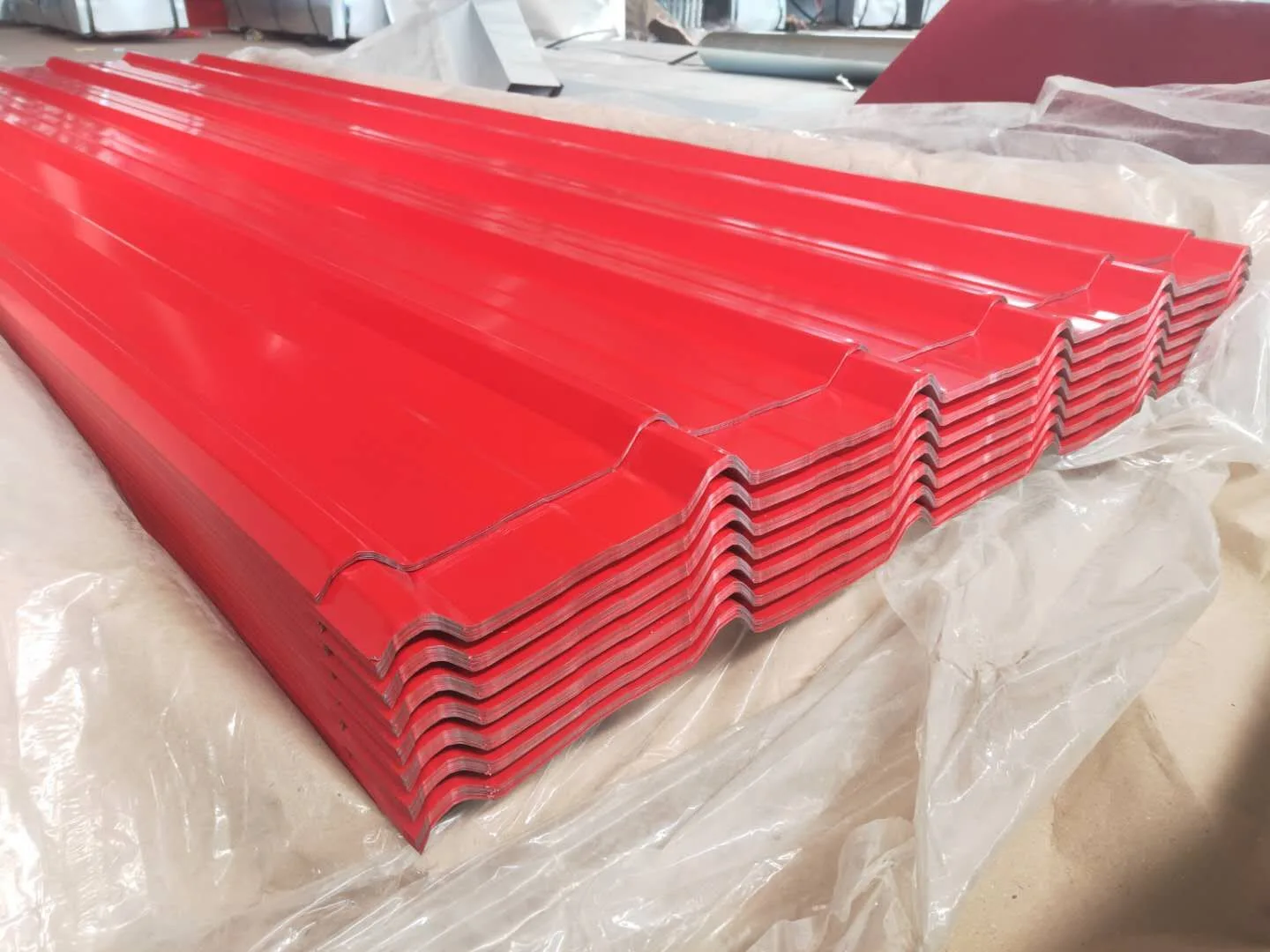
What Is a PPGL T Profile Roofing Sheet and Which Roof Tile Profiles Are Best for Metal Buildings?
PPGL T profile roofing sheet is a pre-painted Galvalume ribbed metal roofing material designed for durable color roofs, wall cladding, metal buildings, warehouses and industrial projects, with a guide to common roof tile profiles.
A professional guide to pre-painted Galvalume T profile roofing sheets, including material structure, coating systems, T rib design, common roof tile profiles, applications, specifications, installation factors and buying advice for importers and contractors.
PPGL T profile roofing sheet is a color-coated metal roof panel made from pre-painted Galvalume steel and formed into a T-shaped rib profile. It combines the atmospheric corrosion resistance of aluminum-zinc coated steel, the color and weather protection of a factory-applied paint system and the load-supporting benefits of a raised rib design.
For metal building suppliers, roofing contractors, importers and construction material distributors, PPGL T profile roofing sheets are valuable because they can deliver durability, attractive color, practical drainage and efficient installation. They are commonly used for warehouses, factories, residential buildings, commercial roofs, agricultural structures and wall cladding systems.
This article provides a complete and original guide to PPGL T profile roofing sheets. It also introduces common metal roof tile profiles so buyers can compare T profile panels with corrugated, trapezoidal, tile effect, ribbed, standing seam and other roofing sheet designs.
1. What Is a PPGL T Profile Roofing Sheet?
A PPGL T profile roofing sheet is a roof panel produced from pre-painted Galvalume steel coil. The steel substrate is coated with an aluminum-zinc alloy layer, then treated, primed, painted, cured and finally roll formed into a T-shaped rib profile.
The name PPGL means pre-painted Galvalume. Galvalume steel usually contains an aluminum-zinc-silicon metallic coating, commonly around 55% aluminum, 43.4% zinc and 1.6% silicon. Aluminum provides barrier protection, zinc contributes sacrificial protection and silicon helps improve coating adhesion.
The T profile is a practical ribbed roof shape. It is different from a smooth flat sheet because its raised ribs improve stiffness and help guide water flow. This makes the sheet suitable for large roof areas, building envelope systems and lightweight steel structures.
2. What Is the Material Structure of PPGL T Profile Roofing Sheet?
PPGL T profile roofing sheet is a multi-layer material. Each layer contributes to strength, corrosion resistance, color appearance and roof service life.
| Layer | Main Function | Importance for Roofing |
|---|---|---|
| Steel substrate | Provides strength, formability and dimensional stability | Determines panel rigidity, roll forming behavior and load performance |
| Aluminum-zinc coating | Protects steel against atmospheric corrosion | Improves long-term durability on exposed roof surfaces |
| Pretreatment layer | Improves paint adhesion and chemical stability | Reduces peeling, blistering and coating failure risks |
| Primer coating | Creates bonding layer and additional corrosion protection | Supports stable paint performance after forming and installation |
| Top paint | Provides color, gloss, UV resistance and weather protection | Determines visible appearance and outdoor color retention |
| Back coating | Protects the underside of the sheet | Helps resist condensation, handling marks and underside corrosion |
3. How Does the T Profile Improve Roof Performance?
The T profile is a ribbed roofing shape with raised lines that resemble a T-shaped or high-rib structure. The exact geometry may vary by manufacturer, but the design goal is similar: increase panel stiffness, improve roof coverage and support effective rainwater drainage.
Main functions of a T profile roof panel
- Higher rigidity: Raised ribs increase bending resistance compared with a flat sheet of the same thickness.
- Better water flow: The rib layout helps water move down the roof slope and reduces surface accumulation.
- Large-area coverage: T profile sheets can cover wide roof areas efficiently, especially in warehouses and industrial buildings.
- Modern appearance: T profile panels provide a cleaner and more linear appearance than traditional wave sheets.
- Flexible installation: They can be used for roofing, wall cladding and building envelope systems depending on design requirements.
For buyers, the important technical details include rib height, rib spacing, effective width, overlap design and sheet thickness. These parameters affect both installation efficiency and roof performance.
4. What Are the Common Roof Tile Profiles for Metal Roofing Sheets?
Metal roofing sheets are available in many profiles. The word "tile profile" may refer broadly to the formed shape of a roof panel, not only traditional tile-like patterns. Each profile has its own appearance, drainage behavior, stiffness and application range.
T Profile Corrugated Profile Trapezoidal Profile Tile Effect Profile Ribbed Profile Standing Seam IBR Profile Sinusoidal Profile Concealed Fastener Panel Decking Profile
| Profile Type | Shape Description | Main Advantage | Typical Use |
|---|---|---|---|
| T profile roofing sheet | Raised linear ribs with a T-like or high-rib appearance | Good stiffness, modern look and practical water drainage | Industrial roofs, warehouses, wall cladding and metal buildings |
| Corrugated roofing sheet | Repeated wave or sinusoidal pattern | Traditional appearance, easy overlapping and cost-effective production | Residential roofs, sheds, farm buildings and general roofing |
| Trapezoidal roofing sheet | Angular ribs with trapezoid-shaped peaks and valleys | Strong rigidity and efficient large-span roof coverage | Factories, warehouses, commercial buildings and wall panels |
| Tile effect roofing sheet | Pressed pattern designed to imitate traditional roof tiles | Decorative appearance with lightweight metal performance | Villas, residential roofs, resorts and architectural projects |
| Ribbed roofing sheet | Regular straight ribs with flat pan areas | Clean appearance and good structural stiffness | Modern buildings, wall systems and roofing panels |
| Standing seam panel | Vertical seams raised above the roof surface | Excellent weather resistance with concealed fastening options | Premium roofs, low-slope roofs and architectural metal roofing |
| IBR profile sheet | Inverted box rib design widely used in some markets | Strong profile strength and commercial availability | Industrial buildings, carports, warehouses and roof cladding |
| Concealed fastener panel | Panel system where fasteners are hidden under laps or clips | Cleaner appearance and reduced direct fastener exposure | Architectural roofs and high-value commercial projects |
| Decking profile | Deep rib sheet designed for structural deck support | High load-bearing capacity | Floor decks, roof decks and structural support systems |
Profile selection tip
If a project needs a cost-effective traditional roof, corrugated profiles are common. If the project needs stronger rigidity and industrial appearance, trapezoidal or T profile sheets are often better. If architectural appearance and water-tightness are more important, standing seam or tile effect profiles may be preferred.
5. How Is PPGL T Profile Roofing Sheet Produced?
The production process begins with Galvalume steel coil. The coil is cleaned, pretreated, coated with primer and top paint, cured and recoiled as PPGL coil. Then the coil is formed into T profile roofing sheets on a profiling line.
- Galvalume substrate selection: The proper base steel grade, thickness, width and AZ coating weight are selected.
- Surface cleaning: Oil, dust and contaminants are removed from the metallic-coated surface.
- Chemical pretreatment: The surface is treated to improve coating adhesion and corrosion resistance.
- Primer application: Primer is applied and cured to create a stable bonding layer.
- Top and back coating: The front side receives color paint, while the underside receives a protective back coat.
- Curing and recoiling: The paint film is cured in ovens and the finished PPGL coil is recoiled.
- T profile forming: The coil passes through profile rollers that shape it into a T rib roofing sheet.
- Cutting and packing: Sheets are cut to length, stacked, protected and packed for shipment.
6. Why Choose PPGL T Profile Roofing Sheets?
PPGL T profile roofing sheets are chosen for projects that require corrosion resistance, color appearance, lightweight construction and profile strength.
Durable Galvalume substrate
The aluminum-zinc coating provides strong atmospheric corrosion resistance on broad roof surfaces.
Factory-applied color finish
The paint system provides color, gloss, UV resistance and additional surface protection.
Strong T rib design
The raised profile improves stiffness and helps support roof panel performance.
Efficient installation
Customized lengths and large sheet coverage help reduce installation time on construction sites.
- Good balance between long-term durability and attractive appearance;
- Suitable for roofing and wall cladding;
- Available in many RAL colors and customized finishes;
- Compatible with roofing accessories such as ridge caps, flashing and gutters;
- Lightweight compared with clay tiles or concrete roofing materials;
- Practical for export supply and large-volume construction projects.
7. Which Paint Systems Are Available for PPGL T Profile Roofing Sheets?
The paint system affects weatherability, color retention, UV resistance and long-term appearance. Buyers should confirm both paint type and coating thickness before ordering.
| Paint System | Main Features | Suitable Applications |
|---|---|---|
| PE polyester | Cost-effective, wide color options and good general performance | General roofing, wall panels and economical projects |
| SMP silicon modified polyester | Better weather resistance and color retention than standard PE | Outdoor roofs with higher durability requirements |
| HDP high durability polyester | Improved UV resistance and long-term outdoor performance | Industrial, commercial and high-sunlight roofing projects |
| PVDF | Excellent weatherability, color stability and chemical resistance | Premium architectural roofs and demanding environments |
8. What Does AZ Coating Mean in PPGL T Profile Roofing Sheet?
PPGL is based on Galvalume steel, so the metallic coating is usually expressed with an AZ designation. Common examples include AZ50, AZ70, AZ100, AZ150 and AZ185. The number generally indicates the total aluminum-zinc coating mass on both sides of the sheet in grams per square meter.
| Environment | Suggested AZ Coating | Notes |
|---|---|---|
| Indoor or temporary applications | AZ50-AZ70 | Suitable for low-corrosion environments |
| General outdoor roofing | AZ100-AZ150 | Common for standard roofs and wall cladding |
| Longer-life roof systems | AZ150-AZ185 | Better durability for wider atmospheric exposure |
| Severe or coastal environments | Project-specific evaluation | May require upgraded paint, careful design or special protection |
9. Where Are PPGL T Profile Roofing Sheets Used?
PPGL T profile roofing sheets are suitable for many construction and building envelope applications.
Industrial buildings
Factories, workshops and warehouses often use T profile roofing sheets because the ribbed design provides good stiffness and efficient roof coverage.
Commercial buildings
Shopping areas, markets, logistics buildings and service structures can use PPGL T profile sheets for practical color roofing and wall cladding.
Residential and light construction
Homes, garages, carports, extensions and small buildings may use PPGL panels when a clean metal roof appearance is desired.
Agricultural buildings
Farm buildings, storage sheds and livestock shelters benefit from lightweight roof panels that are easy to install and maintain.
Wall cladding and facade systems
T profile sheets can also be installed vertically or horizontally as wall panels, partitions and facade materials.
10. What Specifications Should Buyers Confirm Before Ordering?
| Specification Item | Common Options | Why It Matters |
|---|---|---|
| Thickness | 0.20 mm to 0.80 mm or customized | Affects strength, weight, cost and roof span capability |
| Width | Input coil width and effective panel width | Controls coverage area and installation quantity |
| Length | Cut to project requirement | Reduces site cutting and improves installation efficiency |
| AZ coating | AZ50, AZ70, AZ100, AZ150, AZ185 | Influences corrosion protection of the Galvalume substrate |
| Paint system | PE, SMP, HDP, PVDF | Controls weather resistance, color retention and durability |
| Paint thickness | Common front coating 15-25 microns or customized | Affects surface protection and long-term appearance |
| Color | RAL color or custom sample | Ensures architectural appearance and batch consistency |
| T profile design | Rib height, rib spacing, effective width and lap design | Determines drainage, rigidity and installation compatibility |
| Packaging | Bundle packing, waterproof paper, steel straps and pallets | Protects sheets during export, handling and storage |
11. How Does T Profile Compare with Other Roof Sheet Profiles?
Different roof tile profiles perform differently. The best choice depends on building type, roof slope, local weather, appearance requirement, budget and installation method.
| Profile | Strength | Appearance | Best Use |
|---|---|---|---|
| T profile | High rib stiffness and good roof coverage | Clean, linear and industrial | Warehouses, factories, modern metal buildings |
| Corrugated profile | Moderate stiffness with good overlapping behavior | Traditional wave look | General roofing, sheds, rural buildings |
| Trapezoidal profile | Strong angular ribs for large panels | Industrial and modern | Commercial roofs, wall cladding, large buildings |
| Tile effect profile | Decorative shape with lower visual weight | Similar to traditional roof tiles | Residential and architectural roofs |
| Standing seam | Excellent water-tightness when properly designed | Premium vertical seam appearance | Architectural roofs and low-slope roof systems |
12. How Can Buyers Judge the Quality of PPGL T Profile Roofing Sheets?
- Color consistency: Sheets in the same batch should have stable color and gloss.
- Paint adhesion: The coating should resist peeling and cracking during forming and handling.
- AZ coating weight: The metallic coating should match the contract and inspection documents.
- Thickness tolerance: Steel thickness should be controlled according to the agreed specification.
- Profile accuracy: Rib height, spacing and effective width should match the drawing or sample.
- Surface condition: Check for scratches, stains, bubbles, roll marks, color bands and edge damage.
- Packaging quality: Export packaging should protect sheets from moisture, scratches and deformation.
13. What Installation Details Affect PPGL T Profile Roofing Sheet Service Life?
Installation quality directly affects leakage resistance, corrosion behavior and long-term appearance. Important factors include roof slope, overlap, fasteners, edge treatment and drainage design.
Roof slope
A suitable slope helps rainwater drain quickly. Low slope roofs may require special lap design or sealant.
Overlap design
Side laps and end laps should match the profile and local weather conditions. Heavy rain or strong wind areas may require larger overlaps.
Fasteners
Fasteners should be compatible with metal roofing sheets and include sealing washers. Incorrect fastening can cause leakage or coating damage.
Cut edge protection
Cut edges expose the layered material. Clean cutting and careful handling help reduce corrosion risks.
Ventilation and condensation
Proper ventilation and insulation help control condensation under the roof and improve long-term performance.
14. How Should Importers Buy the Right PPGL T Profile Roofing Sheet?
Professional buyers should provide clear specifications instead of only asking for color roof sheets. The following information helps suppliers quote accurately:
- Required thickness, width and length;
- T profile drawing, sample or rib dimensions;
- AZ coating weight such as AZ100, AZ150 or AZ185;
- Paint system such as PE, SMP, HDP or PVDF;
- Front and back paint thickness;
- Color code, RAL number or physical color sample;
- Order quantity and packaging requirement;
- Destination port and delivery schedule;
- Application environment and expected service life;
- Inspection, certificate and document requirements.
Buying recommendation
For PPGL T profile roofing sheets, buyers should focus on AZ coating, paint system, profile accuracy and packaging quality. These details have a stronger impact on roof performance than color selection alone.
15. Which Standards Are Commonly Related to PPGL Roofing Sheets?
PPGL roofing sheets may reference standards for Galvalume substrate, organic coating and finished sheet tolerances. Common references include ASTM A792 for aluminum-zinc coated steel, ASTM A755 for pre-painted metallic-coated steel, EN 10346 for hot-dip coated steel flat products, EN 10169 for organic coated steel, JIS G3322 for pre-painted 55% aluminum-zinc coated steel and AS 1397 for coated steel sheet and strip.
Frequently Asked Questions About PPGL T Profile Roofing Sheets
Is PPGL T profile roofing sheet suitable for outdoor roofs?
Yes. PPGL T profile roofing sheet is suitable for outdoor roofs when the correct AZ coating, paint system, sheet thickness, profile design and installation method are selected for the local environment.
What is the difference between PPGL T profile and PPGL corrugated roofing sheet?
PPGL T profile sheets have raised linear ribs that provide a modern appearance and strong rigidity, while PPGL corrugated sheets have a wave pattern that is traditional, easy to overlap and widely used for general roofing.
Which roof tile profile is best for metal buildings?
There is no single best profile for every project. T profile and trapezoidal profiles are strong choices for industrial buildings, corrugated profiles are economical and traditional, tile effect profiles are decorative, and standing seam systems are suitable for premium water-tight roofing.
What does AZ150 mean in PPGL roofing sheets?
AZ150 means the total aluminum-zinc alloy coating mass on both sides of the steel sheet is approximately 150 g/m². It is a common coating option for roofing and wall cladding applications.
Which paint system should I choose for PPGL T profile roofing sheets?
PE is suitable for general projects, while SMP, HDP and PVDF offer better weather resistance and color retention. The right choice depends on sunlight, humidity, pollution, budget and expected service life.
Can PPGL T profile sheets be used for wall cladding?
Yes. PPGL T profile sheets can be used for wall cladding, facade systems, partitions and enclosure panels. Profile direction, fastening method and visual design should be considered.
Does PPGL T profile roofing sheet rust?
PPGL has protection from aluminum-zinc coating and paint layers, but it is not completely immune to corrosion. Scratches, cut edges, trapped moisture and severe environments can still cause corrosion over time.
What information is needed for a quotation?
Buyers should provide thickness, width, length, T profile dimensions, AZ coating, paint type, color, quantity, packaging requirement, destination port and intended application.
Conclusion: Is PPGL T Profile Roofing Sheet the Right Choice for Your Project?
PPGL T profile roofing sheet is a durable and attractive color metal roofing material that combines pre-painted Galvalume steel with a strong T rib profile. It is suitable for industrial roofs, warehouses, commercial buildings, agricultural structures, residential projects and wall cladding systems.
When comparing roof tile profiles, buyers should consider more than appearance. T profile, corrugated, trapezoidal, tile effect, ribbed and standing seam panels each have different strengths. The right profile depends on roof slope, building type, wind and rain conditions, visual design, installation method and budget.
For reliable performance, buyers should confirm steel thickness, AZ coating weight, paint system, paint thickness, color, T profile dimensions, packaging and supplier quality control. When properly selected and installed, PPGL T profile roofing sheet can provide strong long-term value for modern metal building projects.
Need PPGL T Profile Roofing Sheets or Other Metal Roof Tile Profiles?
Sunsea Steel can support buyers with PPGL T profile roofing sheets, corrugated sheets, trapezoidal panels, tile effect sheets and other color coated metal roofing products in customized thickness, AZ coating, paint system, color, profile and export packaging.
Contact Sunsea SteelFrequently Asked Questions
Is PPGL T profile roofing sheet suitable for outdoor roofs?
Yes. PPGL T profile roofing sheet is suitable for outdoor roofs when the correct AZ coating, paint system, sheet thickness, profile design and installation method are selected for the local environment.
What is the difference between PPGL T profile and PPGL corrugated roofing sheet?
PPGL T profile sheets have raised linear ribs that provide a modern appearance and strong rigidity, while PPGL corrugated sheets have a wave pattern that is traditional, easy to overlap and widely used for general roofing.
Which roof tile profile is best for metal buildings?
There is no single best profile for every project. T profile and trapezoidal profiles are strong choices for industrial buildings, corrugated profiles are economical and traditional, tile effect profiles are decorative, and standing seam systems are suitable for premium water-tight roofing.
What does AZ150 mean in PPGL roofing sheets?
AZ150 means the total aluminum-zinc alloy coating mass on both sides of the steel sheet is approximately 150 g/m². It is a common coating option for roofing and wall cladding applications.
Which paint system should I choose for PPGL T profile roofing sheets?
PE is suitable for general projects, while SMP, HDP and PVDF offer better weather resistance and color retention. The right choice depends on sunlight, humidity, pollution, budget and expected service life.
Can PPGL T profile sheets be used for wall cladding?
Yes. PPGL T profile sheets can be used for wall cladding, facade systems, partitions and enclosure panels. Profile direction, fastening method and visual design should be considered.
Does PPGL T profile roofing sheet rust?
PPGL has protection from aluminum-zinc coating and paint layers, but it is not completely immune to corrosion. Scratches, cut edges, trapped moisture and severe environments can still cause corrosion over time.
What information is needed for a quotation?
Buyers should provide thickness, width, length, T profile dimensions, AZ coating, paint type, color, quantity, packaging requirement, destination port and intended application.