What Is Galvalume Steel Coil and How Do Passivation, Chromating, Anti-Fingerprint, and Oil Coating Affect Strip, Sheet, and Roofing Quality?
A technical guide to Galvalume steel coil: 55% Al-Zn coating performance, AZ coating mass selection, passivation, chromating, anti-fingerprint films, oil coating weight, and quality defects affecting strip, sheet, and roofing panels.
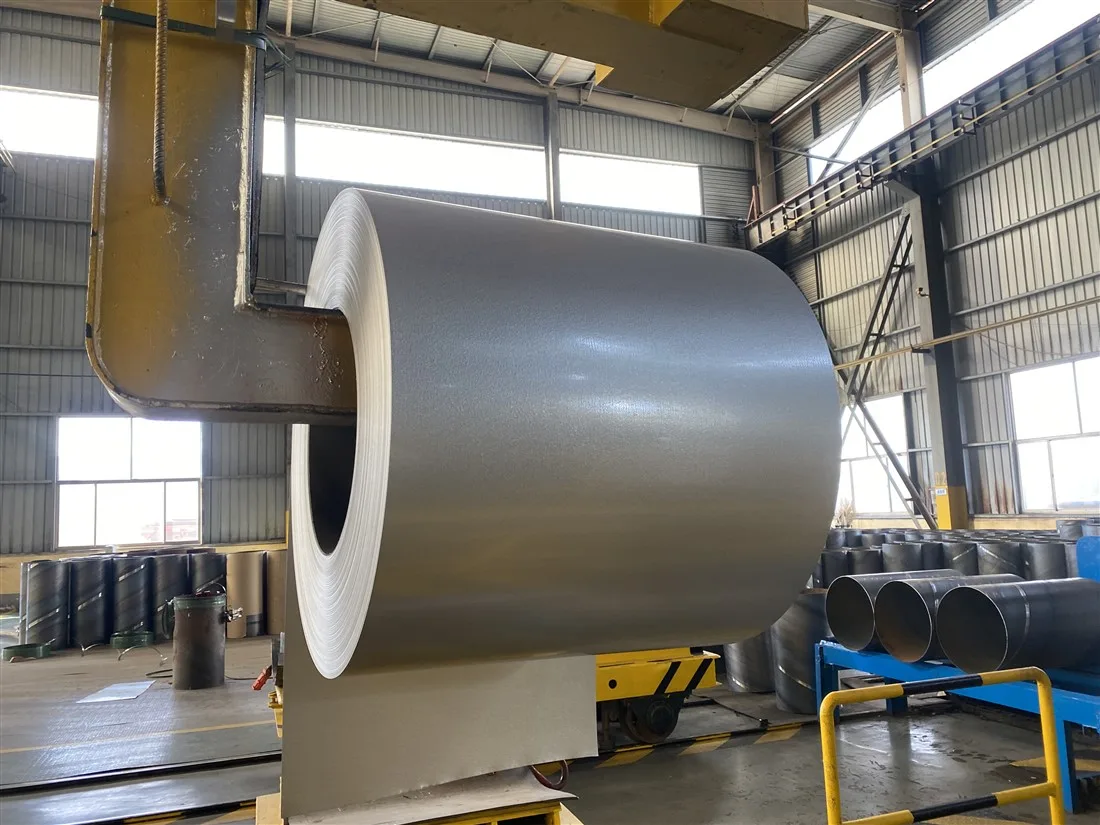
Galvalume steel coil (55% aluminum-zinc alloy coated steel sheet, often specified under ASTM A792/A792M, JIS G3321, or EN 10346 as DX51D+AZ and related grades) is one of the most widely specified metallic-coated substrates for industrial strip, flat sheet, and corrugated roofing panels. Buyers searching for long service life in humid, industrial, or coastal climates frequently ask the same practical question: what actually drives performance-coating mass alone, or the combination of coating chemistry, surface treatment, oil film, and downstream processing control?
This guide explains how Galvalume (also called GL, Aluzinc, or 55% Al-Zn coated steel) works, how coils are converted into strip, plate/sheet, and roofing products, and how passivation, chromating/Cr-free treatment, anti-fingerprint (AFP) films, and oil coating weight influence appearance, formability, storage stability, and field corrosion resistance. It also maps common quality defects to their most frequent root causes so procurement, QC, and fabrication teams can write clearer specifications and inspect incoming coils more effectively.

What Is Galvalume Steel Coil and How Does the 55% Al-Zn Coating Protect Steel?
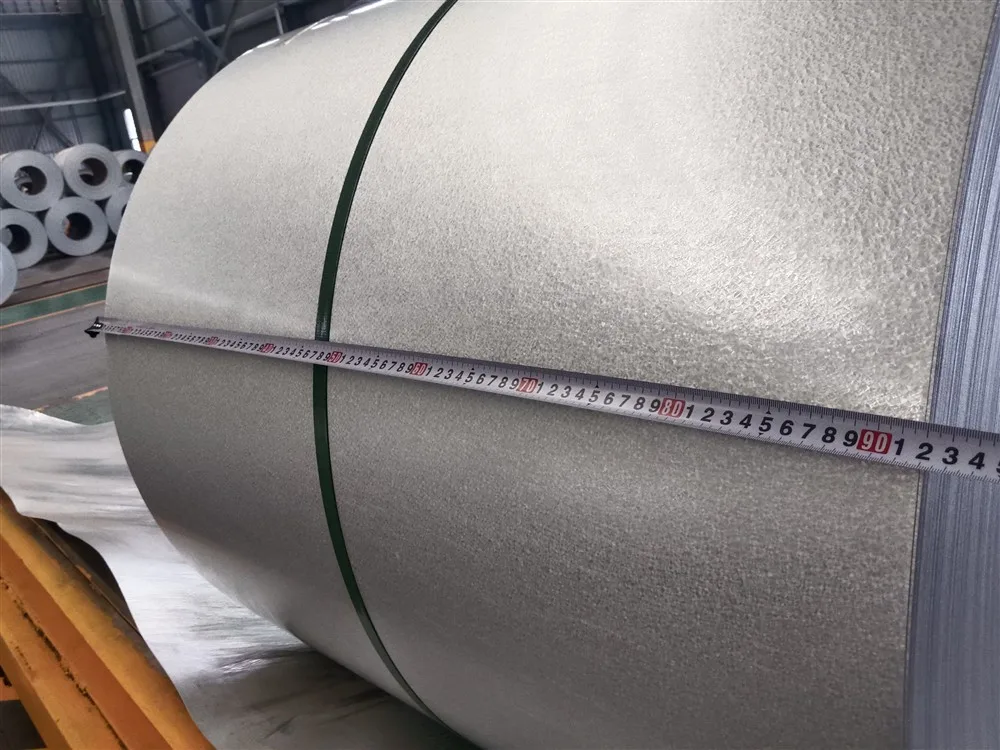
Galvalume is produced by continuously hot-dipping cold-rolled steel strip into a molten bath that is nominally about 55% aluminum, approximately 43.4% zinc, and about 1.6% silicon by weight. Silicon is essential for coating adhesion and for controlling the intermetallic reaction layer at the steel-coating interface. After the strip exits the pot, air knives wipe the molten metal to the target coating mass, the strip cools, and a characteristic dendritic spangle solidifies.
Corrosion protection is dual-mode:
- Barrier protection from aluminum-rich regions - aluminum oxidizes to form a stable surface film that slows general atmospheric attack.
- Sacrificial (galvanic) protection from zinc-rich interdendritic regions - zinc preferentially corrodes at cut edges, scratches, and forming cracks, delaying red rust on the steel substrate.
Industry exposure experience and manufacturer technical literature commonly indicate that an AZ50 / AZM150 Galvalume coating can provide roughly two to four times the atmospheric corrosion life of conventional G90 (Z275) galvanized steel in many rural, industrial, and marine environments, although absolute service life still depends on climate, design details, contact materials, and maintenance. Calculated coating thickness for AZ50 (AZM150) is about 20 um per side based on coating density relationships used in ASTM A792 guidance (approximately 3.75 g/m2 = 1 um for Galvalume; 1.0 oz/ft2 = 305 g/m2 = 3.2 mils total coating thickness).
Which Coating Mass Grades Matter for Strip, Sheet, and Roofing Applications?
Coating designation is the primary corrosion-life lever. ASTM A792/A792M defines minimum triple-spot and single-spot coating masses for both inch-pound and SI systems. Common commercial selections include:
| Common designation | Approx. total both sides | Typical use context |
|---|---|---|
| AZ30 / AZM100 | 0.30 oz/ft2 / 100 g/m2 | Light-duty indoor or short-life products; verify suitability carefully |
| AZ50 / AZM150 | 0.50 oz/ft2 / 150 g/m2 | Mainstream roofing, wall panels, general outdoor sheet |
| AZ55 / AZM165 | 0.55 oz/ft2 / 165 g/m2 | Higher atmospheric durability; common building-panel upgrade |
| AZ60-AZ70 / AZM180-AZM210 | 0.60-0.70 oz/ft2 / 180-210 g/m2 | Aggressive climates, longer design life, demanding industrial sites |
For ASTM AZ50, the triple-spot average minimum is 0.50 oz/ft2 total both sides, with a single-spot minimum of 0.43 oz/ft2. For SI AZM150, the corresponding values are 150 g/m2 triple-spot and 130 g/m2 single-spot. ASTM also notes that coating is not always evenly split side-to-side or edge-to-center; as a practical expectation, either surface normally carries not less than about 40% of the single-spot limit. That variability is why purchase orders should specify both coating designation and the inspection standard, not only a marketing label such as "AZ150".
Base metal grades are equally important for fabrication. Commercial and forming steels (CS/FS or DX51D/DX52D families) support moderate bending and roll forming. Structural grades such as SS Grade 33-80 (approximately 230-550 MPa yield classes) or G300-G550 systems are selected when panel stiffness, snow load, wind uplift, or long-span roofing demand higher strength. Higher strength usually means lower elongation, so tooling radii, roll-forming flower design, and edge condition become more critical.
How Are Galvalume Coils Processed into Strip, Steel Plate/Sheet, and Roofing Panels?
1. Galvalume strip (slit coil)
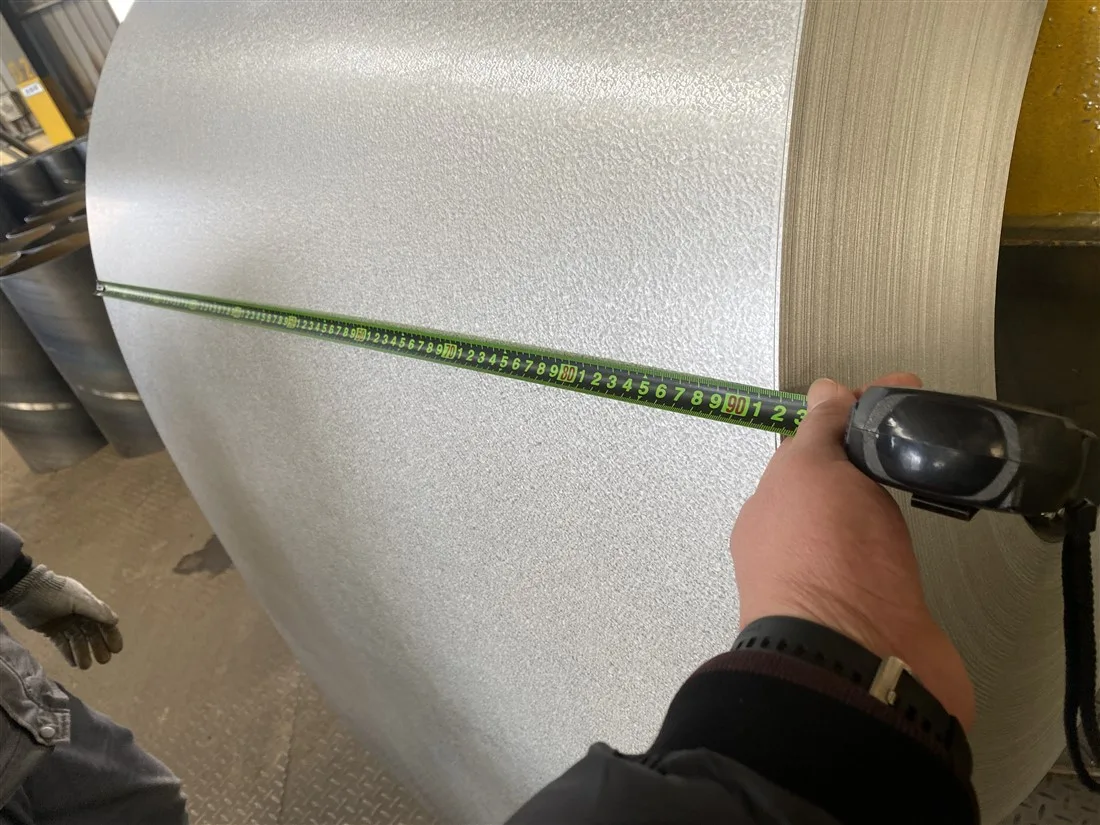
Mother coils are edge-trimmed and slit into narrower strip for tube mills, purlin lines, appliance parts, HVAC components, cable trays, and roll-forming feed. Critical controls include camber, burr height, edge waviness, width tolerance, and residual oil uniformity. Excessive burrs can cut anti-fingerprint films, scrape oil, and seed corrosion at slit edges. For high-speed forming, many fabricators request light oil or an acrylic/AFP surface that can be formed dry, depending on the tool set.
2. Galvalume steel sheet / plate (cut-to-length)
Cut-to-length lines convert coil into flat sheets for cladding, ducting, enclosures, agricultural equipment, and further presswork. Here, shape quality matters as much as coating mass: crossbow, coil set, center buckle, and edge wave all affect nesting, blanking accuracy, and visual flatness. Temper pass and tension leveling improve surface and shape for exposed architectural sheet. Thickness is typically ordered as total product thickness (base metal plus coating) unless a base-metal-only supplement is specified.
3. Roofing sheet and corrugated / profiled panels
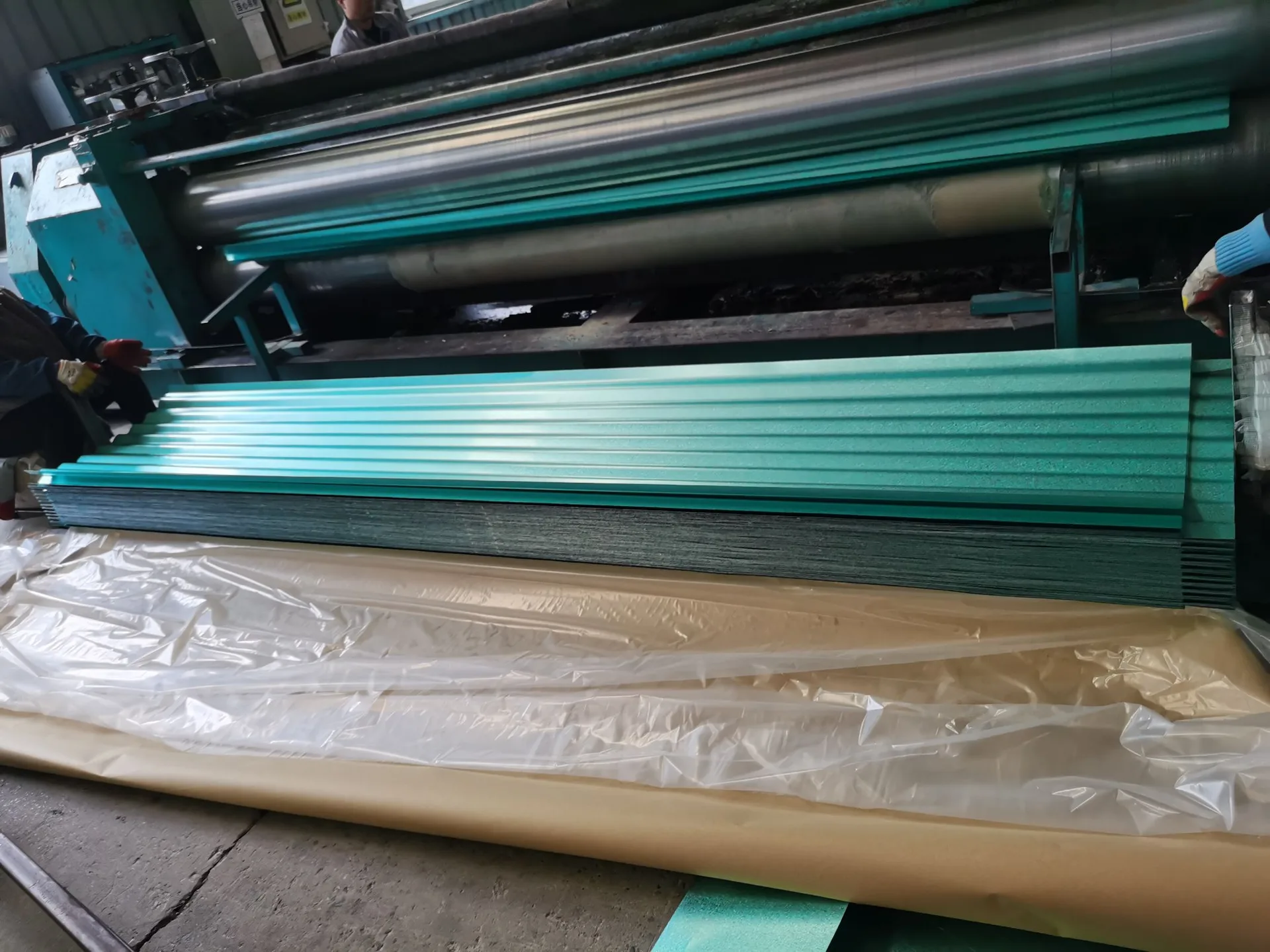
Roofing is the highest-visibility end use for bare and prepainted Galvalume. Common profiles include corrugated, trapezoidal, IBR-type, and tile-look panels. Successful roofing performance depends on more than AZ mass:
- correct grade for spanning and fastening;
- uniform coating and intact surface film after roll forming;
- compatible fasteners, sealants, and flashings;
- drainage design that avoids prolonged wet nesting and dissimilar-metal runoff.
Bare Galvalume roofing is valued for heat reflectivity and long-term corrosion resistance. Prepainted Galvalume (PPGL) adds aesthetics and extra barrier protection, but the metallic coating still remains the final defense at cut edges and scratches. Many building-panel warranties for bare Galvalume perforation resistance are written around multi-decade atmospheric performance when installation and environment rules are followed; actual warranty language is project-specific and should be verified with the supplier.
What Do Passivation, Chromating, Anti-Fingerprint Treatment, and Oil Coating Actually Do?
Hot-dip metallic coating alone is not a complete shipping and fabrication package. Immediately after coating solidification, mills apply chemical and/or organic surface systems to control early corrosion, handling marks, friction, and paintability. These treatments are often under-specified on purchase orders, yet they are a frequent root cause of customer complaints.
Passivation (chemical treatment)
Passivation applies a thin conversion film that retards the formation of wet-storage stain and early white/black corrosion products when moisture is trapped between coil wraps or nested sheets. Without effective passivation, condensed water and restricted oxygen access can rapidly create gray, black, or white staining-especially during ocean freight, monsoon storage, or outdoor yard stacking. Passivation does not replace good packaging; it only extends the safe window against moisture-related stain.
Modern lines increasingly use chromium-free passivation to meet environmental and customer restrictions while targeting corrosion resistance, anti-blackening, acid/alkali resistance, and paint adhesion. Performance still varies by chemistry family, dry-film integrity, strip temperature at application, and post-treatment rinse/dry control.
Chromating / chromate treatment
Traditional chromate (hexavalent or related chromium-bearing) treatments historically provided strong wet-storage protection and were widely used on metallic-coated strip. Many markets now restrict hexavalent chromium, so orders should explicitly state whether chromated, trivalent, or Cr-free chemistry is required. Chromate films can improve early corrosion resistance, but they may also affect field painting and powder-coating adhesion if the surface is not cleaned and pretreated correctly. For painted systems, the coating line pretreatment package must be matched to the paint system rather than assumed interchangeable.
Anti-fingerprint (AFP) / clear organic thin film
Anti-fingerprint treatment-also described as clear acrylic thin-film, resin passivation, or AFP-places a transparent organic or organic-inorganic hybrid layer over the metallic coating. Well-designed AFP systems offer several practical advantages:
- reduced fingerprinting and smudging during handling and installation;
- improved resistance to transit stain and wet-storage blackening;
- more uniform initial brightness and cleaner job-site appearance;
- in some acrylic systems, the ability to roll-form dry without vanishing oil.
AFP is common on appliance-facing GL, electrical enclosures, LCD/back-panel grades, and premium bare roofing products where appearance and clean handling matter. Film thickness is usually only on the order of roughly 0.5-2 um class (exact targets are supplier-specific). Too thin a film can leave incomplete coverage and weak stain resistance; too thick or poorly cured film can cause powdering, tool pickup, poor conductivity, or reduced weldability. Cr-free AFP systems are now mainstream in many export markets.
Oil coating amount (oiling weight)
Mill oil-often a vanishing oil or rust-preventive oil-reduces friction in forming, protects against humidity during short-term storage, and can mask minor handling abrasion. Oil coating weight is typically controlled in the low grams-per-square-meter range. As a practical industrial reference, many metallic-coated products are supplied around roughly 0.5-2.5 g/m2 per side depending on grade, customer line conditions, and whether the product is dry, lightly oiled, or heavily oiled. Exact targets must be agreed with the mill because oil type, viscosity, application method (electrostatic, roll coater, or spray), and strip temperature all change the retained film.
Oil is not a substitute for passivation. Excess oil can create several problems:
- dirt pickup and dark smudges on architectural panels;
- poor paint adhesion if oil is not fully cleaned before coil coating or powder coating;
- slippery stacks that shift in containers;
- staining patterns when oil is non-uniform and moisture migrates under the film.
Insufficient oil, by contrast, increases friction scratches, galling on rolls, and early white rust on dry-chemically-treated material that is stored too long in humid conditions. The correct strategy is to define surface condition as a package: chemically treated + dry, chemically treated + oiled, AFP, or oiled only, then match packaging and storage time to that package.
What Quality Problems Appear on Galvalume Coil, Strip, Sheet, and Roofing-and Why?
Most field complaints are not mysterious metallurgy failures. They are interactions among coating mass, surface chemistry, moisture, mechanical damage, and incompatible accessories. The table below links frequent defects to common causes.
| Quality issue | What you observe | Frequent root causes |
|---|---|---|
| Wet storage stain / white rust / blackening | Gray-black patches, white powder, dull mottling between wraps or nested sheets | Moisture trapped in coil/pack; inadequate passivation or AFP; damaged VCI/paper; long outdoor storage; temperature cycling and condensation during sea freight |
| Bare spots / thin coating / bare edges | Local red-rust initiation earlier than surrounding surface | Air-knife instability, dross, strip shape issues, edge build-up wipe-off, under-specified coating mass, excessive temper/roll abrasion |
| Coating powdering or flaking at bends | Metallic dust, flaking outside tight radii | Heavy coating on high-strength substrate, excessive intermetallic layer, incorrect bend radius, over-aged mechanical properties, reverse bending without process allowance |
| Spangle non-uniformity / appearance mottling | Uneven brightness, irregular spangle size, weathered patchiness | Bath chemistry and cooling variation; passivation non-uniformity; local oil/AFP thickness differences; outdoor weathering differences-not always a performance reject |
| Fingerprint marks and handling smudges | Dark hand prints, glove marks, installation scuffs | No AFP or worn AFP; oil film too thin/dirty; bare handling with moist hands; sliding sheets over each other |
| Oil streaks / sticky surface / dirty panels | Visible stripes, dust adhesion, packaging paper sticking | Uneven oil application, excessive oil weight, wrong oil viscosity, warm storage after oiling |
| Roll-forming scratches and black burnish marks | Linear scuffs, darkened friction tracks on roofing ribs | Dry forming without suitable AFP/oil; contaminated rolls; excessive entry tension; hard-soled foot traffic on installed bare roofs |
| Edge red rust after profiling or cutting | Rust line on cut edges or punched holes | Expected on any metallic coating once steel is exposed; accelerated by low coating mass, acidic condensation, dissimilar metal contact, poor drainage |
| Paint adhesion failure on chromated/passivated GL | Blistering, peeling after coil coating or field paint | Residual oil, incompatible conversion film, insufficient cleaning/pretreatment, over-cured chromate/AFP, wrong primer chemistry |
| Premature perforation near fasteners or flashings | Local coating attack around penetrations | Copper/graphite/lead contact, runoff from copper, carbon-steel swarf left on roof, wrong fastener material, trapped wet insulation, animal confinement or harsh chemicals |
Process-linked causes worth controlling at the mill and the fabricator
- Bath and air-knife control - unstable wiping creates coating mass scatter and edge defects that only appear after salt-spray or outdoor exposure.
- Surface treatment application window - strip temperature, line speed, roll pressure, and drying energy determine whether passivation/AFP is continuous or patchy.
- Oil weight capability study - measure retained oil by solvent extraction or equivalent methods; do not rely only on visual wet look.
- Packaging integrity - waterproof outer wrap, desiccant strategy where needed, upright storage, and avoidance of tarped outdoor piles with rain ingress.
- Fabrication hygiene - remove iron filings daily from roofing valleys; use clean gloves; avoid copper flashings that drain onto GL; select neutral-cure sealants.
How Should Buyers Specify Galvalume for Real Projects?
A robust order description usually includes all of the following:
- Product form: coil, slit strip, cut sheet, or roofing profile;
- Standard and grade: e.g., ASTM A792 CS Type B / SS Grade 50, or EN 10346 DX51D+AZ / S350GD+AZ;
- Dimensions: thickness, width, coil ID/OD, sheet length or profile effective width;
- Coating designation: AZ50 / AZM150, AZ55 / AZM165, etc.;
- Surface treatment package: chromated or Cr-free passivated; AFP grade if required; oiled or dry; target oil range if oiled;
- Surface quality class: regular spangle, minimized spangle, exposed / unexposed;
- Mechanical targets: yield, tensile, elongation or hardness band for roll forming;
- Testing and certificates: coating mass triple-spot, tensile, bend test, salt-spray if contractually required;
- Packaging and destination climate: export seaworthy packing for humid routes.
For roofing in mild inland climates, AZ50/AZM150 with Cr-free passivation or AFP is a common baseline. For coastal or high-humidity industrial zones, many designers move to AZ55-AZ70 classes and tighten packaging/storage rules. For appliance or electronics housings, AFP uniformity, conductivity, and appearance often rank above maximum coating mass. For deep drawing or severe roll forming, discuss coating adhesion and whether a slightly lower coating mass or special forming grade will reduce powdering risk.
Practical Inspection Checklist Before Accepting a Shipment
- Verify heat/coil numbers against MTC; check coating designation and mechanical grade.
- Inspect outer wraps for seawater wetting, broken strapping, or crushed edges.
- Unwind or lift outer wraps carefully and look for black/white stain patterns repeating with wrap pitch.
- Check oil uniformity and residue if paintability is required downstream.
- Measure thickness and width at multiple locations; compare to ordered tolerances.
- Perform coating bend checks appropriate to grade; examine outside-of-bend flaking.
- For roofing orders, trial-form one panel and inspect rib tops, side laps, and cut edges before full production.
Key Takeaways for Specifiers and Fabricators
Galvalume steel coil succeeds when coating chemistry, coating mass, surface treatment, oil management, and fabrication practice are treated as one system. The 55% aluminum-zinc coating supplies durable barrier-plus-galvanic protection for strip, flat sheet, and roofing panels; passivation and chromate/Cr-free films protect the product through logistics; anti-fingerprint layers preserve appearance and handling cleanliness; and controlled oil weight supports forming without sabotaging paint or cleanliness. Most quality incidents can be traced to moisture management failures, incomplete surface films, wrong treatment selection for the end use, mechanical abrasion, or incompatible site materials-not to a single mysterious bad coil.
If you are sourcing Galvalume steel coil, slit strip, flat sheet, or corrugated roofing panels and need help matching AZ mass, mechanical grade, and surface treatment to a climate or fabrication line, contact SUNSEA STEEL CO., LIMITED at [email protected] or WhatsApp +86 152 6555 2259 via https://wa.me/8615265552259.
Frequently Asked Questions
What is Galvalume steel coil and how is it different from galvanized steel?
Galvalume is steel sheet hot-dip coated with a nominally 55% aluminum, about 43.4% zinc, and about 1.6% silicon alloy. Compared with conventional zinc-coated (galvanized) steel, it combines aluminum barrier protection with zinc sacrificial protection. In many atmospheres, AZ50/AZM150 Galvalume is cited as offering roughly two to four times the corrosion life of G90 galvanized, depending on environment and design details.
Which coating mass should I choose for Galvalume roofing sheet?
AZ50/AZM150 is a mainstream choice for general building panels. AZ55/AZM165 and higher masses are often preferred for longer design life or more aggressive climates. Coastal, industrial, or high-humidity projects should also tighten packaging, fastener selection, and drainage details-not only increase coating mass.
What do passivation and chromating do on Galvalume coil?
Passivation and chromate/Cr-free chemical treatments create a thin conversion film that retards wet-storage stain, white rust, and blackening when moisture is trapped between wraps or nested sheets. They improve logistics durability but do not replace seaworthy packaging or dry storage. Many export markets now specify chromium-free systems.
Why specify anti-fingerprint treatment on Galvalume strip or sheet?
Anti-fingerprint (AFP) clear films reduce handling marks, improve resistance to transit stain, and help preserve a clean bright appearance. Some acrylic AFP systems also allow dry roll forming without vanishing oil. AFP is especially useful for appliance parts, exposed panels, and premium bare roofing products.
How much oil coating is typically applied to Galvalume steel coil?
Oil weight is application-specific, but many metallic-coated products are supplied in a light range on the order of about 0.5-2.5 g/m2 per side. Too little oil increases forming scratches and early stain risk; too much oil causes dirt pickup, stacking slip, and paint adhesion problems. Always define oil type and target range with the mill.
What causes blackening or white rust on Galvalume coils during shipping?
The most common cause is moisture trapped between coil wraps or nested sheets under restricted oxygen, especially during sea freight or outdoor storage. Contributing factors include damaged packaging, inadequate passivation/AFP, temperature cycling with condensation, and long storage time. Effective chemical treatment plus dry, intact packaging greatly reduces the risk.
Can Galvalume steel coil be processed into strip, flat sheet, and corrugated roofing panels?
Yes. Mother coils can be slit into narrow strip, cut to flat sheet/plate lengths, or roll-formed into corrugated and trapezoidal roofing panels. Each route needs matching mechanical grade, coating adhesion, surface treatment, and edge quality. High-strength roofing grades require careful tooling radii to avoid coating powdering.
Which standards apply to Galvalume steel coil procurement?
Common references include ASTM A792/A792M for 55% aluminum-zinc alloy-coated sheet, JIS G3321, and EN 10346 designations such as DX51D+AZ or structural +AZ grades. Orders should state standard, grade, coating designation, surface treatment, dimensions, and testing requirements explicitly.