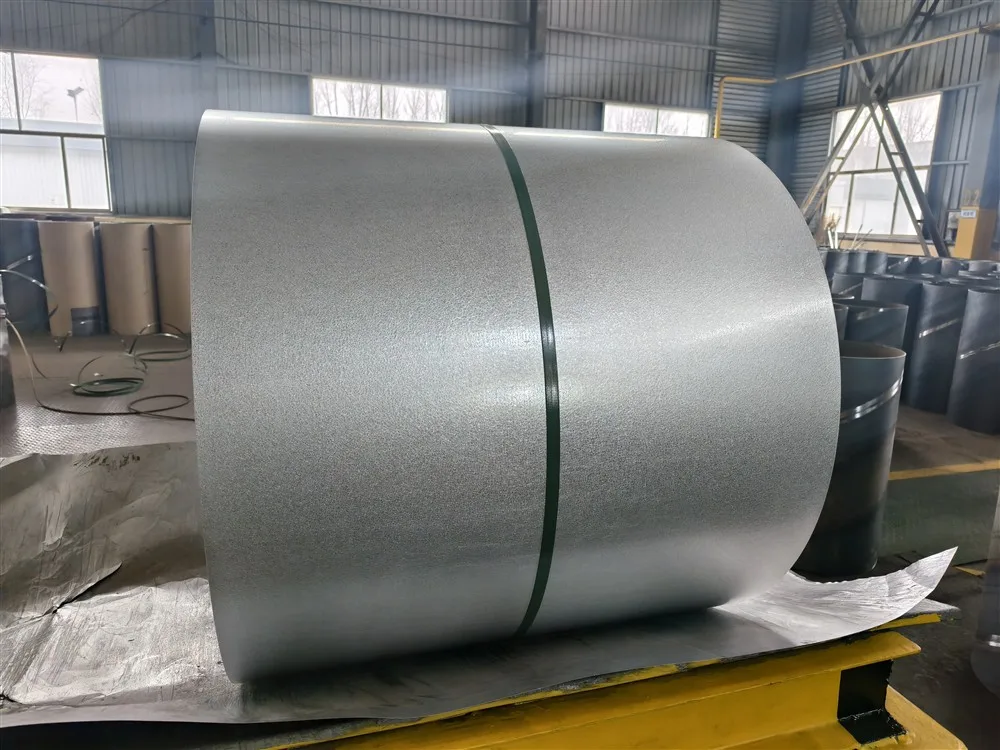
What Is Galvalume Steel Coil and Why Is It a Smart Choice for Roofing, Construction and Industrial Applications?
What Is Galvalume Steel Coil and Why Is It a Smart Choice for Roofing, Construction and Industrial Applications?
Galvalume steel coil, also known as Aluzinc steel coil, GL coil or aluminum-zinc coated steel coil, has become one of the most important coated steel products for roofing, wall cladding, construction materials and industrial manufacturing. It is widely valued for its excellent corrosion resistance, attractive metallic surface, heat reflectivity and long service life.
In many building and manufacturing projects, material selection directly affects durability, maintenance cost, appearance and long-term performance. Traditional galvanized steel coil remains widely used, but Galvalume steel coil offers a different type of protection through its aluminum-zinc alloy coating. For roofing systems, exterior wall panels and high-exposure environments, this coating can provide strong resistance against atmospheric corrosion when properly selected and applied.
However, not every Galvalume coil is the same. Coating weight, base metal grade, surface treatment, thickness, width, mechanical properties and application environment all influence the final result. For importers, contractors, distributors and manufacturers, understanding these details is essential before placing an order.
This article provides a professional and original guide to Galvalume steel coil, explaining what it is, how it is produced, what advantages it offers, where it is used and how buyers can choose a reliable specification for their projects.
1. What Galvalume Steel Coil Means
Galvalume steel coil is a flat steel product coated with an alloy layer mainly composed of aluminum, zinc and silicon. The most common coating composition is approximately 55% aluminum, 43.4% zinc and 1.6% silicon. This coating structure gives Galvalume steel its distinctive combination of corrosion resistance and heat resistance.
The steel substrate is usually cold rolled steel or hot rolled pickled steel. After continuous coating and controlled cooling, the finished material is wound into coils for further processing. Galvalume steel coil can be slit, cut, roll formed, stamped, corrugated or painted depending on the final application.
In the market, Galvalume steel coil may also be referred to as GL coil, Aluzinc coil, aluminum-zinc alloy coated steel coil, AZ coated steel coil or 55% Al-Zn coated steel coil. Although these terms are often used interchangeably, buyers should always confirm the exact coating composition, standard and coating weight before purchase.
2. Aluminum-Zinc Coating Structure
The performance of Galvalume steel coil comes from the interaction between aluminum and zinc in the coating layer. Aluminum forms a stable oxide layer on the surface. This layer slows down the penetration of oxygen and moisture, helping protect the steel substrate from corrosion. Because aluminum has strong resistance to atmospheric corrosion, it contributes significantly to the long service life of Galvalume steel in many environments.
Zinc provides electrochemical protection. When the coating is scratched or the cut edge is exposed, zinc can corrode preferentially and help protect nearby steel areas. This sacrificial behavior is an important reason why zinc-coated steels are widely used for corrosion protection.
Silicon is added in a small amount to improve the bond between the coating and the base steel. It helps control the formation of brittle alloy layers during the hot dip coating process, improving coating adhesion and forming performance.
Professional note: Galvalume coating is not simply a thicker version of galvanized coating. It is a different alloy coating system. Its advantages are especially visible in atmospheric exposure, heat reflection and roofing applications, while cut-edge behavior should still be considered in project design.
3. Production Process
Galvalume steel coil is generally produced through a continuous hot dip coating process. The production line is similar in principle to a galvanizing line, but the molten bath contains aluminum-zinc alloy instead of pure zinc.
Main production steps
- Steel coil preparation: The base steel coil is selected according to the required grade, thickness and mechanical properties.
- Cleaning and surface preparation: Oil, dust, oxides and other contaminants are removed from the steel surface to ensure proper coating adhesion.
- Continuous annealing: The steel strip is heated in a controlled atmosphere to improve its mechanical properties and prepare it for coating.
- Hot dip aluminum-zinc coating: The steel strip passes through a molten aluminum-zinc-silicon alloy bath.
- Coating thickness control: Air knives control the amount of coating on both sides of the strip according to the required coating weight.
- Cooling and solidification: The coated strip is cooled under controlled conditions to form a stable and uniform coating surface.
- Skin pass and tension leveling: These processes improve flatness, surface appearance and shape stability.
- Surface treatment: Anti-fingerprint treatment, passivation, oiling or chromate-free treatment may be applied depending on customer requirements.
- Recoiling and packaging: The finished Galvalume steel is wound into coils and packed for storage, export or downstream fabrication.
A stable production process is essential because coating uniformity, strip flatness, adhesion and surface condition directly affect downstream performance.
4. Key Advantages of Galvalume Steel Coil
Excellent corrosion resistance
One of the biggest advantages of Galvalume steel is its corrosion resistance in many atmospheric environments. The aluminum-rich coating provides strong barrier protection, while the zinc content supports sacrificial protection. For roofing and wall cladding applications, this can mean longer service life and reduced maintenance when the material is properly installed and used in a suitable environment.
Good heat reflectivity
Galvalume steel has a bright metallic surface that reflects heat effectively. This makes it useful for roofing systems, especially in regions with strong sunlight. Better heat reflectivity can help reduce surface temperature and improve building comfort when combined with proper insulation and ventilation design.
Attractive surface appearance
The surface of Galvalume steel coil often has a smooth, fine and metallic appearance. This makes it suitable for architectural applications where appearance matters. It can be used directly or as a substrate for pre-painted steel.
Good formability
Galvalume steel coil can be roll formed into roofing sheets, wall panels, corrugated sheets and other profiles. With the correct base steel grade and coating specification, it performs well in many forming operations.
Long-term cost efficiency
Although Galvalume steel coil may cost more than some standard galvanized steel products, its durability and lower maintenance requirements can provide better long-term value for certain applications. For projects where corrosion resistance and service life are important, total lifecycle cost is often more meaningful than initial material price.
5. Galvalume Steel Coil vs Galvanized Steel Coil
Galvalume steel coil and galvanized steel coil are both coated steel products, but their coating structures are different. Galvalume steel uses an aluminum-zinc-silicon alloy coating, while galvanized steel mainly uses zinc coating.
| Item | Galvalume Steel Coil | Galvanized Steel Coil |
|---|---|---|
| Coating composition | Aluminum-zinc-silicon alloy | Mainly zinc |
| Common name | GL coil, Aluzinc coil | GI coil |
| Corrosion resistance | Excellent in many atmospheric environments | Good general corrosion resistance |
| Heat reflectivity | Higher | Moderate |
| Cut edge protection | Moderate | Generally stronger due to zinc content |
| Surface appearance | Smooth metallic finish | Spangle or zinc crystal pattern |
| Typical coating mark | AZ coating, such as AZ150 | Z coating, such as Z275 |
Galvalume often performs very well in open atmospheric exposure, especially on broad flat surfaces such as roofing and wall panels. Galvanized steel, on the other hand, often provides stronger sacrificial protection at cut edges because of its higher zinc content. Therefore, the choice should depend on application details.
6. AZ Coating Weight Explained
Galvalume coating weight is commonly expressed with an AZ designation, such as AZ50, AZ70, AZ100, AZ150 or AZ185. The number generally refers to the total coating mass on both sides of the steel sheet, measured in grams per square meter.
For example, AZ150 Galvalume steel coil means the total aluminum-zinc coating weight is approximately 150 g/m². Coating weight is important because it influences corrosion resistance and service life. A heavier coating usually provides better protection, but it also increases material cost.
| Application | Suggested Coating | Notes |
|---|---|---|
| Indoor panels and light-duty parts | AZ50-AZ70 | Suitable for low-corrosion environments. |
| General building panels | AZ100-AZ150 | Common for roofing and wall cladding. |
| Outdoor roofing and exposed panels | AZ150-AZ185 | Better durability for long-term use. |
| Harsh or coastal environments | Project-specific evaluation | May require higher coating, paint system or alternative protection. |
For roofing applications, AZ150 is one of the most commonly requested specifications in many markets because it offers a practical balance between durability and cost.
7. Common International Standards
ASTM A792
ASTM A792 is a widely used standard for steel sheet coated by the hot dip process with 55% aluminum-zinc alloy coating. It is common in North American and international trade.
EN 10346
EN 10346 covers continuously hot-dip coated steel flat products, including aluminum-zinc coated products. It is commonly used in European markets.
AS 1397
AS 1397 is used in Australia and covers steel sheet and strip coated with zinc, aluminum-zinc and other metallic coatings. It is important for markets where Australian standards are required.
JIS G3321
JIS G3321 is a Japanese standard for hot-dip 55% aluminum-zinc alloy-coated steel sheets and coils.
Because standards may differ in grade designations, coating names, tolerances and testing methods, buyers should avoid vague specifications. A professional purchase order should clearly state the standard, grade, thickness, coating weight and surface treatment.
8. Main Applications of Galvalume Steel Coil
Roofing sheets
Roofing is one of the most important applications of Galvalume steel coil. The material can be roll formed into corrugated roofing sheets, trapezoidal roofing panels, standing seam panels and other roof profiles. Its corrosion resistance and heat reflectivity make it suitable for warehouses, factories, residential buildings, agricultural structures, commercial buildings and industrial facilities.
Wall cladding
Galvalume steel coil is widely used for exterior wall panels and cladding systems. Its metallic appearance and durability make it attractive for both functional and architectural use.
Pre-painted steel substrate
Galvalume steel can be used as the base material for pre-painted Aluzinc steel coil, sometimes called PPGL coil. The aluminum-zinc coating improves the corrosion resistance of the painted product, making it suitable for roofing and wall systems.
Steel structure accessories
Flashing, ridge caps, gutters, downspouts, trim components and other accessories can be produced from Galvalume steel coil. These parts need good corrosion resistance and formability.
Industrial panels and equipment
Galvalume steel may be used in industrial panels, equipment covers, storage buildings and components exposed to outdoor or semi-outdoor conditions.
Agricultural buildings
Farm buildings, barns, storage sheds and livestock shelters often use metal roofing and wall panels. Galvalume steel provides a durable option when environmental conditions are properly considered.
9. How to Choose the Right Galvalume Steel Coil
Choosing the right Galvalume steel coil requires more than selecting thickness and price. Buyers should consider material performance, processing conditions and end-use environment.
Confirm the application
A coil used for roofing panels may require different properties from a coil used for wall cladding, flashing, appliance panels or painted substrate. The final use determines the required strength, coating weight, surface treatment and formability.
Select the right coating weight
For general roofing and wall panels, AZ150 is commonly used. For lighter indoor applications, lower coating weights may be acceptable. For long-term outdoor exposure, higher coating or additional paint protection may be needed.
Choose the proper steel grade
If the material will be roll formed, bent or stamped, formability matters. If it will be used for load-bearing panels or structural profiles, yield strength becomes more important. The grade should match the processing and performance requirements.
Check thickness and width tolerance
Accurate thickness and width are essential for downstream production. Poor tolerance control can cause processing problems, inconsistent panel shape or installation issues.
Confirm surface treatment
Surface treatment affects storage stability, fingerprint resistance, painting performance and corrosion protection during transportation. Common options include passivated, oiled, dry, anti-fingerprint and chromate-free treatment.
Evaluate packaging requirements
For export orders, packaging is critical. Galvalume steel coils should be protected from moisture, impact, edge damage and seawater-related corrosion risks during shipping.
10. Quality Inspection Points
A high-quality Galvalume steel coil should meet both technical specifications and practical processing requirements.
- Coating uniformity: The aluminum-zinc coating should be uniform across the strip.
- Coating adhesion: Good adhesion is essential for bending and roll forming.
- Surface quality: The surface should be clean, smooth and free from serious defects such as scratches, black spots, stains, roll marks, white rust or coating defects.
- Flatness and coil shape: Good flatness improves downstream fabrication and reduces production waste.
- Mechanical properties: Yield strength, tensile strength and elongation should meet the required application.
- Packaging condition: Moisture resistance, edge protection and strong export packaging are important for international shipments.
11. Storage and Handling Tips
Proper storage and handling help maintain coil quality before fabrication. Coils should be stored in a dry and ventilated warehouse, protected from rain, condensation and direct contact with wet surfaces. Packaging should remain intact until processing. Suitable lifting equipment should be used to avoid coil damage, and the surface should not be dragged or scratched.
For long-term storage, buyers should inspect coils periodically for moisture or surface changes. Good storage practice is especially important for export buyers because coils may spend weeks in transit before reaching the final warehouse.
12. Buying Checklist for Global Buyers
Before ordering Galvalume steel coil, buyers should confirm the following details with the supplier:
- Required standard, such as ASTM A792, EN 10346, AS 1397 or JIS G3321
- Steel grade and mechanical properties
- Thickness, width and tolerance requirements
- Coating weight, such as AZ100, AZ150 or AZ185
- Surface treatment, such as passivated, oiled, dry or anti-fingerprint
- Coil weight and inner diameter
- Application, such as roofing, wall cladding, PPGL substrate or accessories
- Packaging method for domestic delivery or export shipment
- Mill test certificate and inspection documents
- Delivery time and shipment terms
A professional Galvalume steel coil supplier should be able to recommend specifications based on the buyer's application instead of only providing a price list.
13. Frequently Asked Questions About Galvalume Steel Coil
Is Galvalume steel coil the same as Aluzinc steel coil?
In many markets, the terms are used to describe the same type of aluminum-zinc alloy coated steel. However, buyers should always confirm coating composition, standard and coating weight.
What does AZ150 mean?
AZ150 means the total aluminum-zinc alloy coating mass on both sides of the steel sheet is approximately 150 g/m². It is a common specification for roofing and wall panel applications.
Is Galvalume better than galvanized steel?
It depends on the application. Galvalume often offers excellent atmospheric corrosion resistance and heat reflectivity, while galvanized steel may provide stronger cut-edge sacrificial protection. The best choice depends on environment, design and processing conditions.
Can Galvalume steel coil be painted?
Yes. Galvalume steel coil can be used as a substrate for pre-painted steel, often called PPGL coil. Proper surface pretreatment is important for paint adhesion and long-term coating performance.
Is Galvalume steel suitable for roofing?
Yes. Roofing is one of the most common applications of Galvalume steel coil. It is widely used for corrugated roofing sheets, standing seam panels and metal building roof systems.
Does Galvalume steel rust?
Galvalume steel has strong corrosion resistance, but it is not completely immune to corrosion. Scratches, cut edges, harsh chemicals, trapped moisture and unsuitable environments may still cause corrosion over time.
Conclusion: Building Long-Term Value with Galvalume Steel Coil
Galvalume steel coil is a high-performance coated steel product designed for durability, corrosion resistance and efficient fabrication. Its aluminum-zinc-silicon coating provides a strong combination of barrier protection, sacrificial behavior, heat reflectivity and attractive appearance.
For roofing, wall cladding, construction panels, agricultural buildings, industrial components and pre-painted steel substrate, Galvalume steel coil can be an excellent material choice when the specification is properly selected.
The most important factors include coating weight, steel grade, thickness and width tolerance, surface treatment, forming requirements, environmental exposure, packaging conditions and supplier quality control. A smart buyer should not choose Galvalume steel coil only by price. The best purchasing decision comes from matching the material to the application, confirming the standard, checking quality documents and working with a supplier who understands both production and end-use requirements.
Need Galvalume Steel Coil for Roofing or Industrial Projects?
Before ordering, confirm your target standard, coating weight, steel grade, thickness, surface treatment and final application. A professional supplier can help you choose the right Galvalume steel coil specification for reliable performance, efficient processing and better long-term value.