What is Galvanized Steel Coil? Complete Guide to Hot-Dip Galvanizing
Comprehensive introduction to hot-dip galvanized steel: the galvanizing process, zinc coating weights, surface finishes, standards, and why GI steel is the world's most widely used coated steel product.
What is Galvanized Steel Coil? Complete Guide to Hot-Dip Galvanizing
Comprehensive introduction to hot-dip galvanized steel: the galvanizing process, zinc coating weights, surface finishes, standards, and why GI steel is the world's most widely used coated steel product.
Hot-dip galvanized steel coil (GI) is produced by passing cold-rolled or hot-rolled steel strip through a bath of molten zinc at approximately 460°C. This metallurgical bonding process creates a multi-layered zinc-iron alloy coating that provides exceptional corrosion protection — making GI the world's most widely used coated flat steel product, with global annual production exceeding 180 million metric tons.
The technology dates back to 1836 when French engineer Sorel first patented the hot-dip galvanizing process. Nearly 200 years later, the fundamental chemistry remains the same, though modern continuous galvanizing lines (CGL) now operate at speeds up to 200 meters per minute with computerized coating weight control accurate to ±3 g/m².
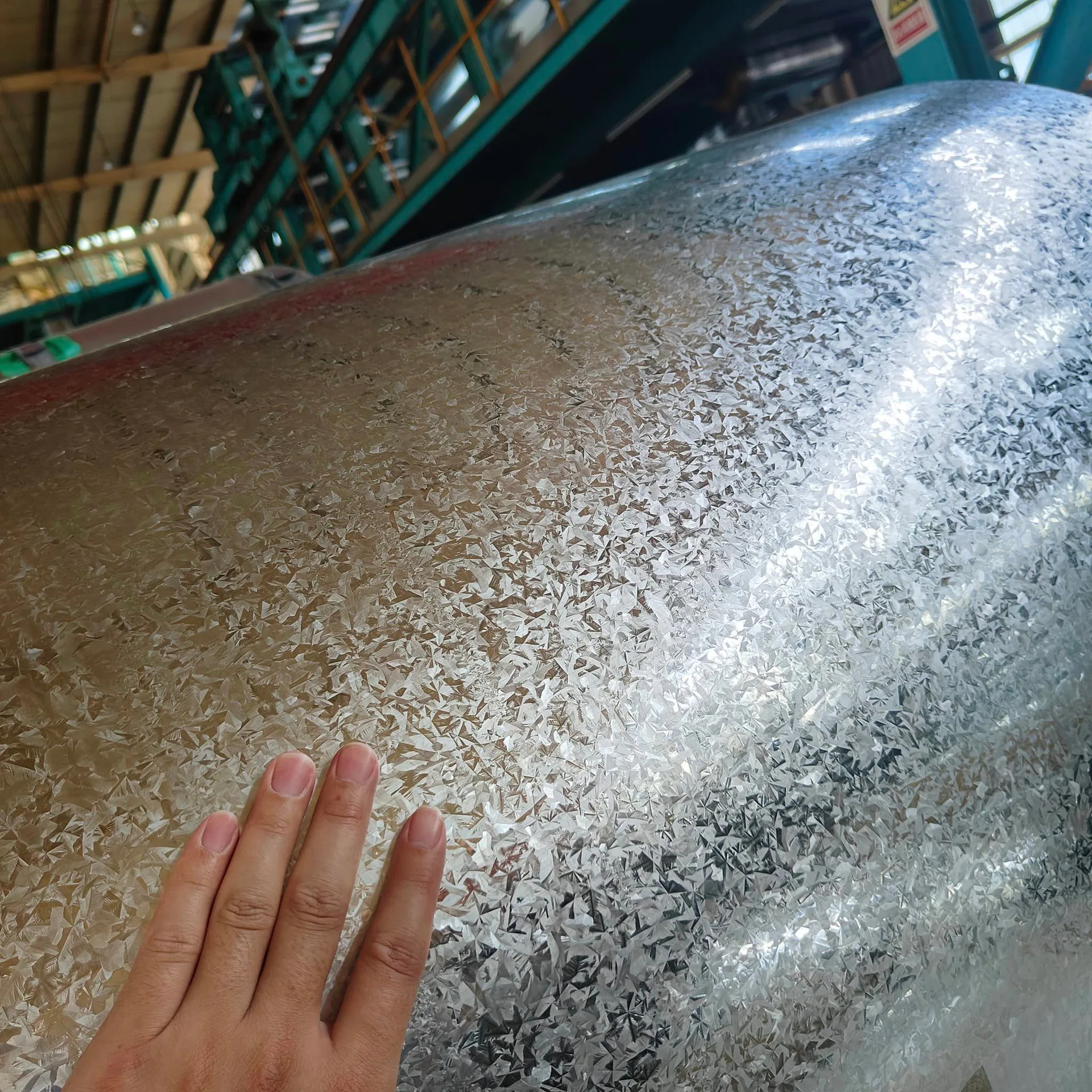
The Continuous Galvanizing Process (CGL)
Modern CGL lines operate 24/7 and can produce 400,000+ MT/year. The process involves:
- Uncoiling & Welding: Cold rolled coils are joined end-to-end for continuous processing
- Cleaning: Alkaline cleaning removes oils and contaminants from the strip surface
- Annealing: Strip passes through a reducing atmosphere furnace at 700-850°C to soften the steel and prepare an oxide-free surface
- Zinc Bath Immersion: Strip enters the 460°C molten zinc bath (99.5%+ pure zinc with controlled aluminum additions of 0.15-0.25%)
- Air Knife Wiping: High-pressure nitrogen jets precisely control final coating weight from Z30 to Z600
- Cooling & Spangle Control: Cooling rate and zinc chemistry determine spangle pattern
- Skin Pass & Tension Leveling: Final surface texture and flatness adjustment
- Chemical Treatment: Chromating, passivation, or oiling for corrosion protection during storage
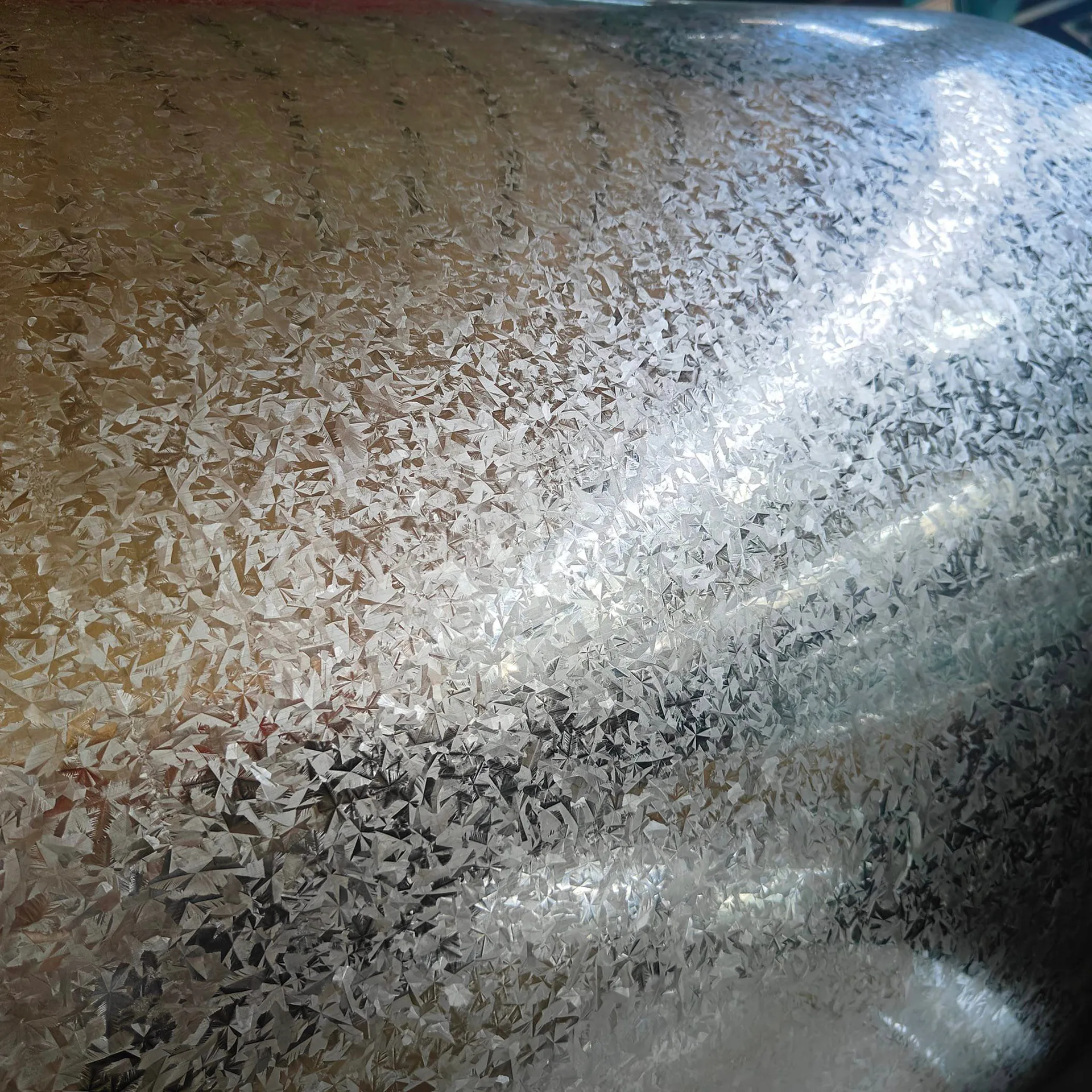
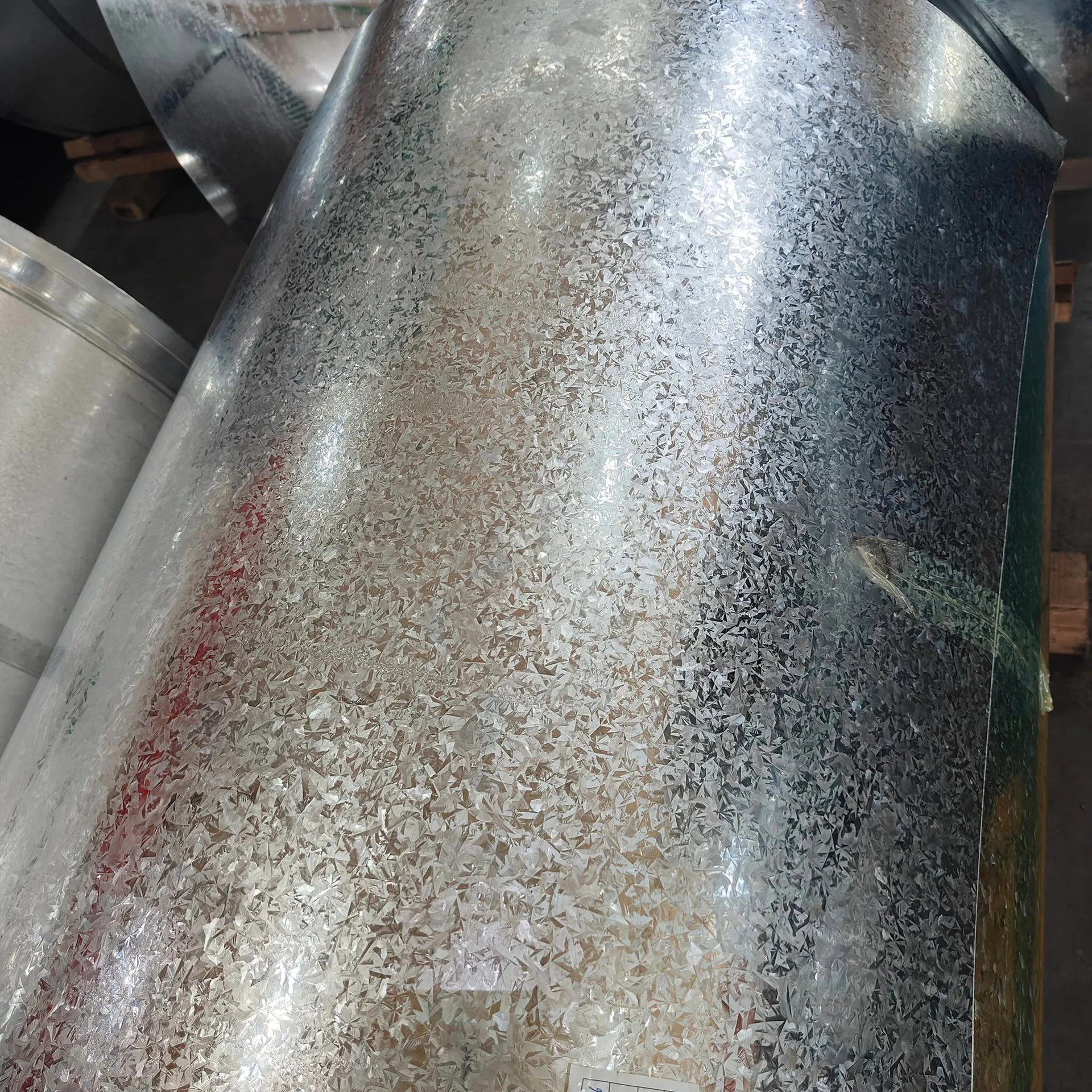
Understanding Zinc Coating Weights: Z40 to Z275
Zinc coating weight is measured in grams per square meter (total both sides). The choice of coating weight directly determines corrosion life:
| Designation | Zinc Weight (g/m²) | Thickness per Side (μm) | Typical Life (Rural) | Best Applications |
|---|---|---|---|---|
| Z40-Z60 | 40-60 | 3-4 | 3-5 years | Interior ductwork, temporary covers |
| Z80-Z100 | 80-100 | 6-7 | 10-15 years | General construction, standard roofing |
| Z120-Z150 | 120-150 | 8-11 | 15-20 years | Outdoor structures, industrial buildings |
| Z180-Z200 | 180-200 | 13-14 | 20-25 years | Coastal environments, heavy industry |
| Z275 | 275 | 19 | 25-35 years | Marine, chemical plants, extreme exposure |
In urban/industrial environments, zinc consumption rate increases by 2-4× due to acid rain, SO₂, and salt exposure. Always specify one grade higher than rural calculations suggest.
Spangle Types and Surface Finish Selection
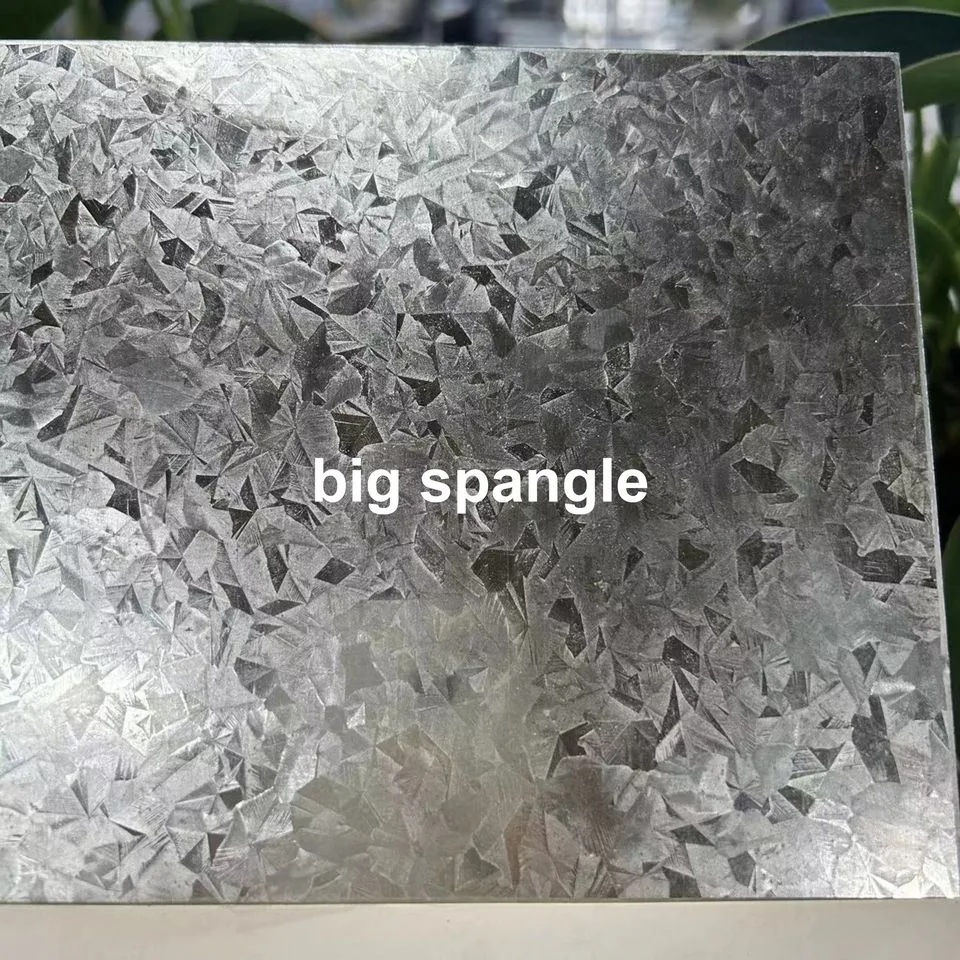
The visible crystalline pattern on galvanized steel is called "spangle". It's controlled by zinc bath chemistry and cooling rate:
- Regular Spangle: Natural zinc crystal pattern (2-10mm crystals). Lowest cost. Acceptable for concealed or painted surfaces. Most common for construction and general use.
- Minimized Spangle: Smaller crystals (0.5-2mm) achieved by adding antimony/bismuth to zinc bath and accelerated cooling. Better appearance at modest cost premium.
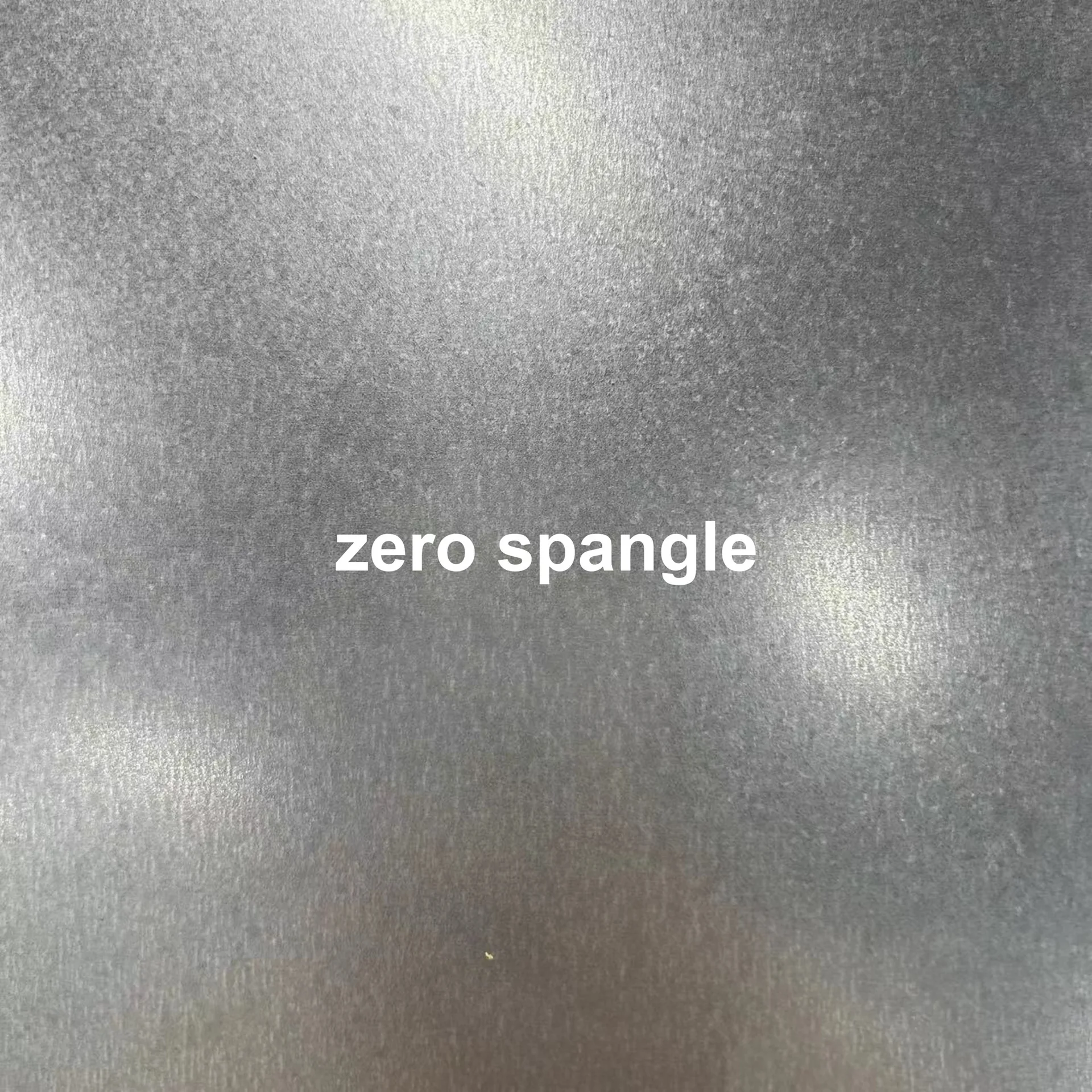
- Zero Spangle: No visible crystal structure. Achieved by zinc bath chemistry modification and rapid cooling spray. Essential for painting, laminating, and visible surfaces. Required for PPGI substrate.
Surface roughness decreases from regular (Ra 1.5-2.5μm) through minimized (Ra 1.0-1.8μm) to zero spangle (Ra 0.6-1.2μm), directly improving paint adhesion and finish quality.
📌 Key Takeaways
- GI is produced by immersing steel in molten zinc at 460°C on continuous galvanizing lines
- Coating weights range from Z40 (economy interior) to Z275 (marine/extreme exposure)
- Three spangle types: regular (lowest cost), minimized (better appearance), zero (paint-ready)
- Corrosion life ranges from 3 years (Z40 rural) to 35+ years (Z275 rural)
- Modern CGL lines can produce 400,000+ MT/year with ±3 g/m² coating precision
Conclusion
Hot-dip galvanized steel remains the gold standard for cost-effective corrosion protection nearly 200 years after its invention. Understanding coating weights, spangle types, and surface treatments allows you to specify exactly the right grade for your application — avoiding both over-specification (wasted cost) and under-specification (premature failure).
💬 Need Expert Advice?
Our steel specialists are ready to help with product selection, technical questions, and competitive pricing.