What Is PPGL Steel Coil and How Does It Differ from PPGI in Coating Mass and Paint Durability?
PPGL technical guide: Galvalume substrate advantages vs PPGI, AZ mass and paint pairing, edge creep risks, roll-forming defects, and order specifications.
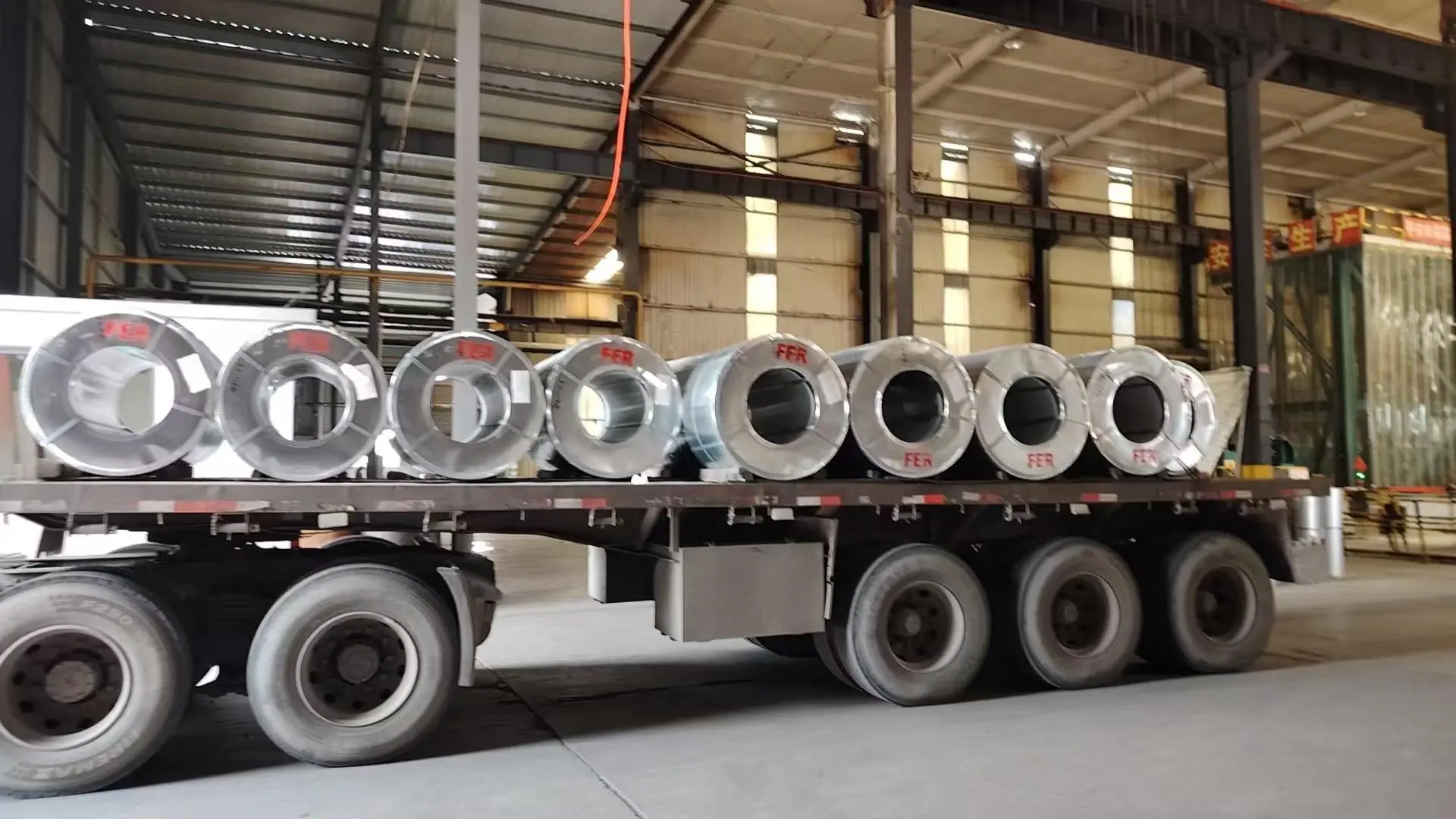
PPGL steel coil—prepainted Galvalume / prepainted 55% aluminum-zinc coated steel—combines a high-performance Al-Zn metallic substrate with a factory-applied organic coating system. For buyers comparing PPGI and PPGL, the practical question is not only color chart availability. It is whether the project needs the cut-edge and atmospheric advantages of Galvalume beneath the paint film, especially on roofs, wall panels, and industrial cladding exposed to humidity, UV, or coastal aerosols.
This article explains the PPGL stack, how AZ coating mass interacts with paint durability, which paint systems pair best with Galvalume substrates, and which quality risks are unique—or more pronounced—when the metallic layer is 55% Al-Zn rather than pure zinc.

What Is PPGL and How Does It Differ from PPGI?
Both products are continuous coil-coated. The decisive difference is the metallic coating under the paint:
- PPGI uses hot-dip zinc (GI) substrates, typically ordered to ASTM A653 / EN 10346 +Z systems.
- PPGL uses hot-dip 55% aluminum-zinc (GL / Galvalume) substrates, typically ordered to ASTM A792 / EN 10346 +AZ systems.
Galvalume’s dual protection—aluminum-rich barrier regions plus zinc-rich sacrificial regions—often provides longer bare atmospheric life than comparable zinc coatings. When painted, that metallic advantage still matters at cut edges, reverse-side condensation zones, fastener holes, and any location where paint is thin, damaged, or microcracked after profiling.
How Is a PPGL Coating System Structured?
- Steel grade selected for forming or structural panel loads (e.g., DX51D+AZ, S280GD+AZ, S350GD+AZ, G550 class equivalents).
- Al-Zn coating mass such as AZ70 / AZ100 / AZ150 (AZM equivalents) depending on climate and warranty intent.
- Surface cleaning and conversion pretreatment formulated for Al-Zn surfaces (not assumed identical to GI pretreatments).
- Primer (commonly ~5–7 µm class) for adhesion and corrosion inhibition.
- Topcoat (commonly ~15–25 µm class for building products; project-specific builds may differ).
- Back coat / reverse primer for handling and moisture protection.
Because Al-Zn surfaces and zinc surfaces do not respond identically to every pretreatment chemistry, coil coaters must validate the conversion coating and primer package specifically on GL. Field painting over passivated bare GL is a separate topic; factory coil coating uses controlled cleaning and pretreatment that should be process-qualified.
Which AZ Mass and Paint System Combinations Work Best?
| Project condition | Typical metallic mass direction | Paint system direction |
|---|---|---|
| Mild inland roofing/walls | AZ70–AZ100 class | PE or SMP |
| General industrial / high UV inland | AZ100–AZ150 | SMP / HDP |
| Coastal or long aesthetic life | AZ150 and above often preferred | HDP or PVDF |
| Dark colors on sun-facing roofs | Adequate AZ + strong reverse side | Higher durability topcoat; consider heat buildup |
A frequent specification error is pairing premium PVDF with a very light AZ mass, or pairing heavy AZ with an interior-grade PE topcoat in a high-UV coastal city. Durability is the weaker link in the stack, not the most expensive single layer.
Where Is PPGL Preferred over PPGI?
- Bare-edge corrosion sensitivity on corrugated and standing-seam style profiles.
- Industrial atmospheres where longer metallic life under paint defects is valued.
- Regions with established Galvalume roofing practice and warranty ecosystems.
- Projects seeking lower long-term maintenance on cut edges and reverse-side condensation risk.
PPGI can still be the better commercial choice for indoor products, mild climates, or markets standardized on zinc substrates and local roll-forming practices. The decision should be climate + detailing + warranty language, not only unit price per ton.
What Quality Problems Are Common on PPGL—and What Causes Them?
| Defect / complaint | Typical observation | Root-cause patterns |
|---|---|---|
| Edge creep / underfilm corrosion | Corrosion advancing from cut edge | Low AZ mass, poor drainage at laps, aggressive marine salt, damaged cut edges, weak primer |
| Paint microcracking on ribs | Hairline cracks after roll forming | Tight profile radii on high-strength GL, high DFT, paint flexibility mismatch |
| Adhesion failure after forming or aging | Peel at bends or blister fields | Pretreatment not optimized for Al-Zn, residual surface films, cure window misses |
| Color fade / chalking | Loss of gloss and color | Topcoat under-specified for UV belt, thin film, dark color heat acceleration |
| Tension-bend staining risk on substrate side | Local metallic coating stress marks under paint | Coating ductility + severe bending; more relevant when paint is thin or damaged |
| Reverse-side white corrosion in packs | Stain on backer between sheets | Moisture in bundles, inadequate reverse coat, blocked drying, long outdoor storage |
| Dissimilar metal attack at flashings | Local premature staining near copper/lead/graphite contact | Incompatible accessories or runoff onto Al-Zn systems |
Specification Checklist for PPGL Orders
- Standard/grade: ASTM A792 + paint system callout, or EN 10346 +AZ grade + EN 10169 organic coating requirements.
- AZ designation (e.g., AZ100/AZ150) and whether triple-spot certification is required.
- Paint resin system, DFT top/back, gloss, RAL/custom color, and coating structure (2/1 or 2/2).
- Mechanical properties aligned to roll-former tooling.
- Test package: T-bend, reverse impact, cross-hatch adhesion, MEK/cure check, salt spray if contractual, ΔE/gloss vs master.
- Protective film requirement for dark high-gloss finishes, if needed for fabrication.
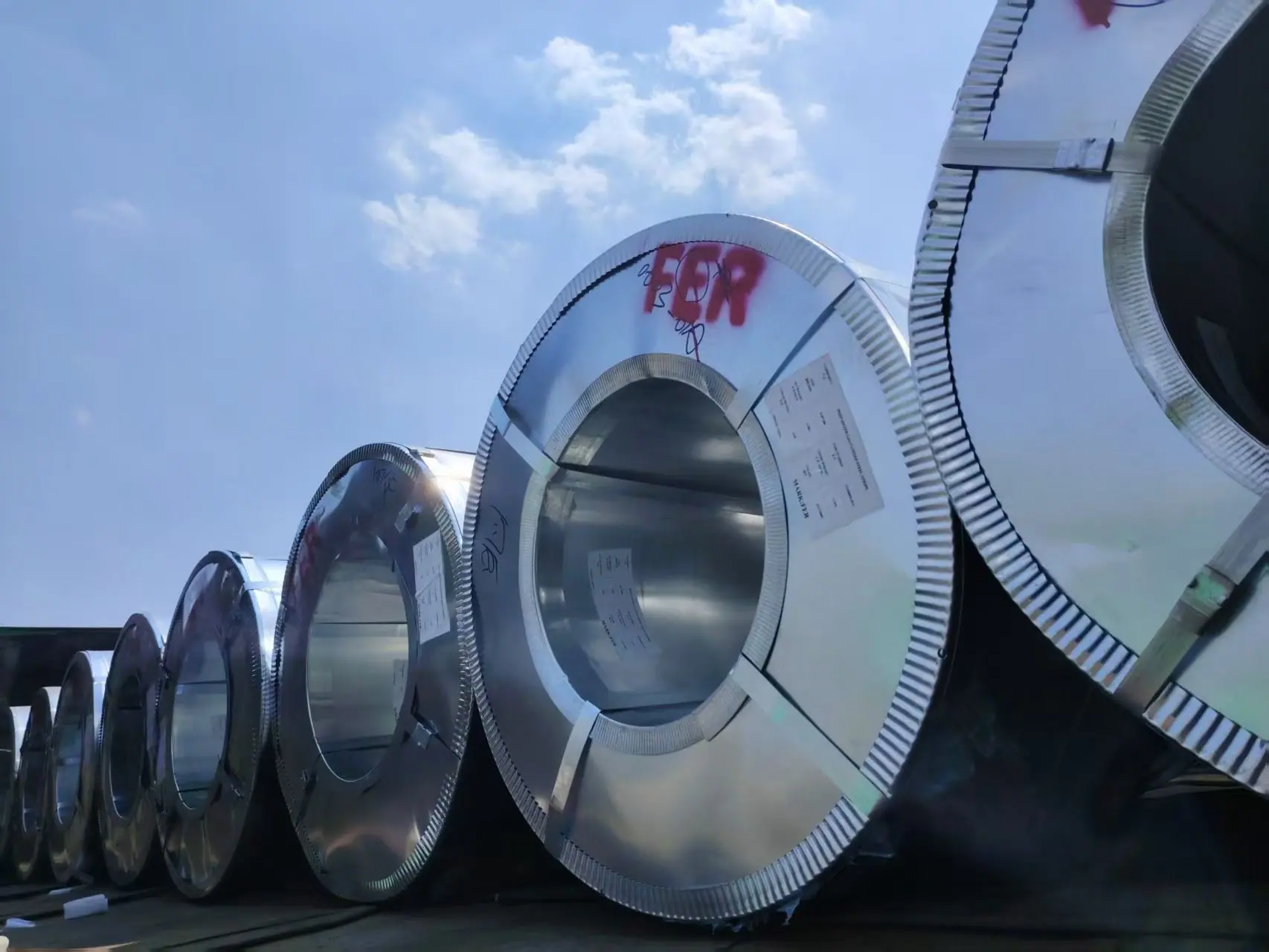
- Export packing suitable for humidity and voyage time.
Key Takeaways
PPGL is not simply “PPGI with a different brochure.” The Galvalume substrate changes pretreatment needs, edge-corrosion behavior, and long-term performance under paint discontinuities. Specify AZ mass and paint chemistry as a pair, validate forming flexibility on the real profile, and control moisture in packaging—those three actions prevent most expensive field disputes.
For PPGL coils and prepainted Galvalume roofing feedstock, contact SUNSEA STEEL CO., LIMITED at [email protected] or WhatsApp +86 152 6555 2259 via https://wa.me/8615265552259.
Frequently Asked Questions
What is PPGL steel coil?
PPGL is prepainted Galvalume coil: steel with a 55% aluminum-zinc metallic coating that is coil-coated with primer and finish paint. It is widely used for exterior roofing and wall panels where longer metallic protection under the paint film is desired.
What is the main difference between PPGI and PPGL?
PPGI uses a zinc (galvanized) substrate, while PPGL uses a 55% aluminum-zinc (Galvalume) substrate. Paint systems may look similar, but cut-edge corrosion behavior, pretreatment chemistry, and long-term durability under paint damage can differ significantly.
Which AZ coating mass is common for PPGL roofing?
AZ100 to AZ150 class substrates are common for many exterior building applications, with higher masses considered for aggressive climates or longer design life. Exact selection should match climate, warranty, and detailing-not only catalog defaults.
Is PVDF always necessary on PPGL?
No. PE, SMP, and HDP are widely used depending on UV load and budget. PVDF is preferred when long color retention and chalk resistance are critical, especially on architectural or coastal projects, but it should be paired with adequate AZ mass and good installation practice.
Why can PPGL show edge corrosion even with good paint?
Cut edges expose steel and metallic coating. If AZ mass is low, drainage is poor, salt load is high, or paint microcracks at ribs, corrosion can initiate at edges and creepage under the film. Paint quality alone cannot eliminate edge electrochemistry.
What standards are used for PPGL?
Metallic substrate is often ASTM A792/A792M or EN 10346 +AZ. Prepainted building products may reference ASTM A755/A755M and EN 10169, with performance tests from EN 13523 methods.
Can PPGL be roll-formed into corrugated roofing sheets?
Yes. PPGL is commonly roll-formed into corrugated, trapezoidal, and tile profiles. Confirm mechanical grade, paint flexibility (T-bend), and tooling radii before mass production to avoid rib cracking and coating damage.