What Steel Roofing Sheet Should You Choose: GI, Galvalume, PPGI, or PPGL?
Complete steel roofing sheet guide: GI vs GL vs PPGI vs PPGL, coating selection, profile/grade effects, defect causes, and jobsite handling rules.
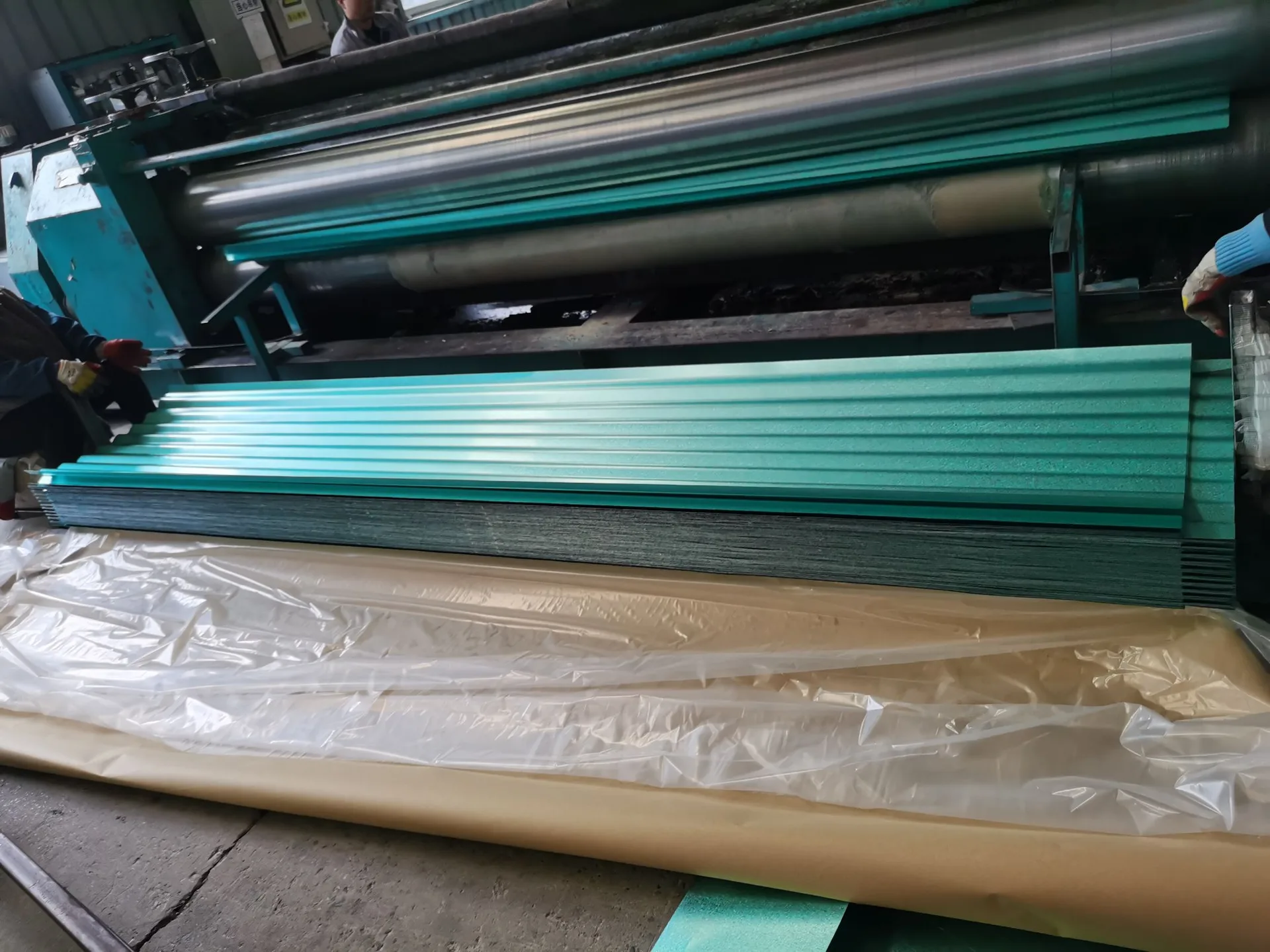
Steel roofing sheets—corrugated, trapezoidal, IBR-type, and tile-look profiles—are where coil specifications become weatherproof building envelopes. Whether the feedstock is bare GI, bare Galvalume (GL), PPGI, or PPGL, roof performance depends on the interaction of metallic coating, organic coating (if any), mechanical grade, profile geometry, fastening, drainage, and site handling. Many roof failures blamed on “bad sheets” begin as mismatched specifications or installation details.
This guide explains how to select substrate and coating systems for steel roofing panels, which profile and thickness ranges are commonly used, what quality problems appear before and after installation, and how to write procurement specs that survive both roll forming and tropical or coastal weather.

What Materials Are Used for Steel Roofing Sheets?
| Feedstock | Metallic system | When it is often chosen |
|---|---|---|
| Bare GI roofing | Zinc-coated coil | Cost-sensitive projects in mild climates; paintable sites |
| Bare GL / Galvalume roofing | 55% Al-Zn coated coil | Longer bare atmospheric life, heat reflectivity, industrial/coastal-leaning exposure |
| PPGI roofing | Painted zinc substrate | Color architecture with zinc substrate standard |
| PPGL roofing | Painted Al-Zn substrate | Colored roofs needing stronger metallic backup at edges and defects |
Common ordered thickness for light roofing coils is often about 0.12–0.80 mm depending on market practice, with many structural corrugated and trapezoidal panels clustered around 0.30–0.60 mm for residential/commercial use and thicker gauges for longer spans or higher wind/snow loads. Width before profiling is commonly 600–1250 mm, with effective cover width reduced by side-lap geometry.
Which Coating Masses and Paint Systems Fit Roofing Exposure?
- Bare GI: G60/Z180 to G90/Z275 are frequent construction baselines; heavier zinc for harsher sites.
- Bare GL: AZ50/AZM150 class is a mainstream exterior choice; AZ55/AZM165 and higher for longer life or tougher climates.
- Prepainted systems: PE for economy inland roofs; SMP/HDP for improved weatherability; PVDF for premium color retention. Reverse-side coating matters because roof sheets nest and can trap condensation in packs and on cool nights.
Coating mass and paint resin must match the climate belt. Equatorial UV, coastal chloride, industrial SO2, and high diurnal condensation each punish different weak points: organic chalking, metallic edge attack, or wet-storage stain before installation.
How Do Profile Design and Steel Grade Affect Roof Performance?
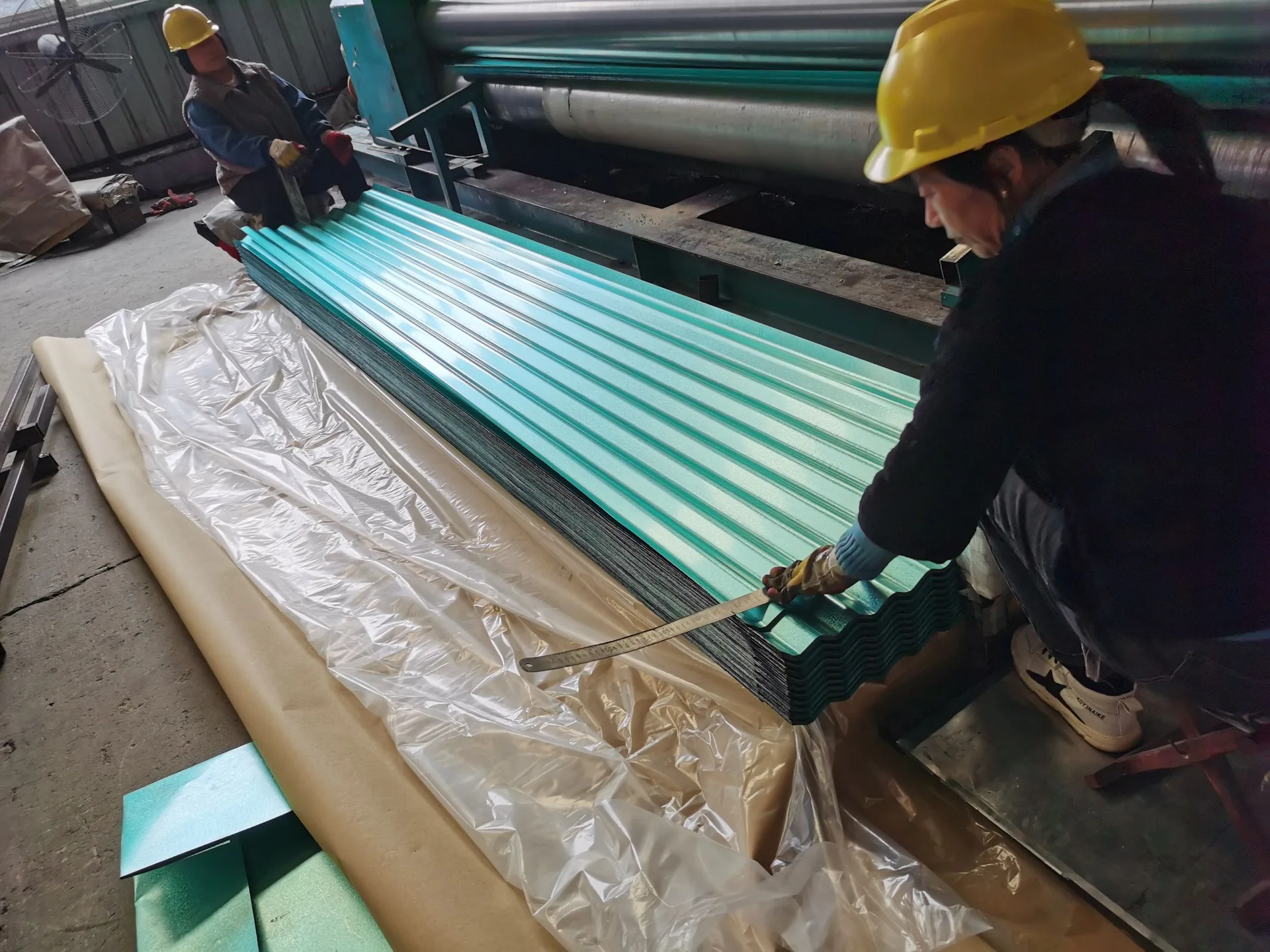
Profile depth, rib spacing, and yield strength control spanning capacity, walkability, and oil-canning appearance. Structural grades (for example S280GD–S350GD families or G300–G550 class products, depending on standard) allow longer spans but reduce elongation, increasing the risk of coating cracks at sharp bends if tooling is aggressive.
Key design/fabrication controls:
- minimum bend radii compatible with coating and paint DFT;
- side-lap and end-lap geometry that drains rather than ponds water;
- fastener line positions that do not overstress ribs;
- thermal movement allowance on long metal roofs;
- compatible flashings—avoid copper or graphite contact with GL/GI systems.
What Quality Problems Appear on Roofing Sheets—and Why?
| Problem | Stage | Common causes |
|---|---|---|
| White rust / black stain in bundles | Storage / transit | Rain ingress, plastic wrap without ventilation, missing passivation on bare coils, nested condensation |
| Rib paint cracking | Roll forming | High-strength thin sheet + tight radii, brittle topcoat, excessive DFT, cold forming without process window |
| Scuff marks and black burnish | Forming / install | Dirty rolls, sheet sliding, hard-soled traffic on bare GL/GI roofs |
| Oil canning / waviness | After install | Light gauge + wide flat pan, residual shape from coil, overdriven fasteners, thermal buckling |
| Fastener leakage / local corrosion | In service | Wrong washer material, over/under torque, dissimilar metal screws, unsealed penetrations |
| Cut-edge red rust staining | In service | Expected to some degree on cut steel; accelerated by low coating mass, acidic moisture, poor drainage, steel swarf left on roof |
| Color fade / chalking | In service | Under-specified paint system for UV, thin topcoat, dark heat-absorbing colors |
| Dissimilar metal runoff staining | In service | Copper flashings or untreated carbon-steel debris corroding onto coated panels |
How Should Buyers Specify Steel Roofing Sheets?
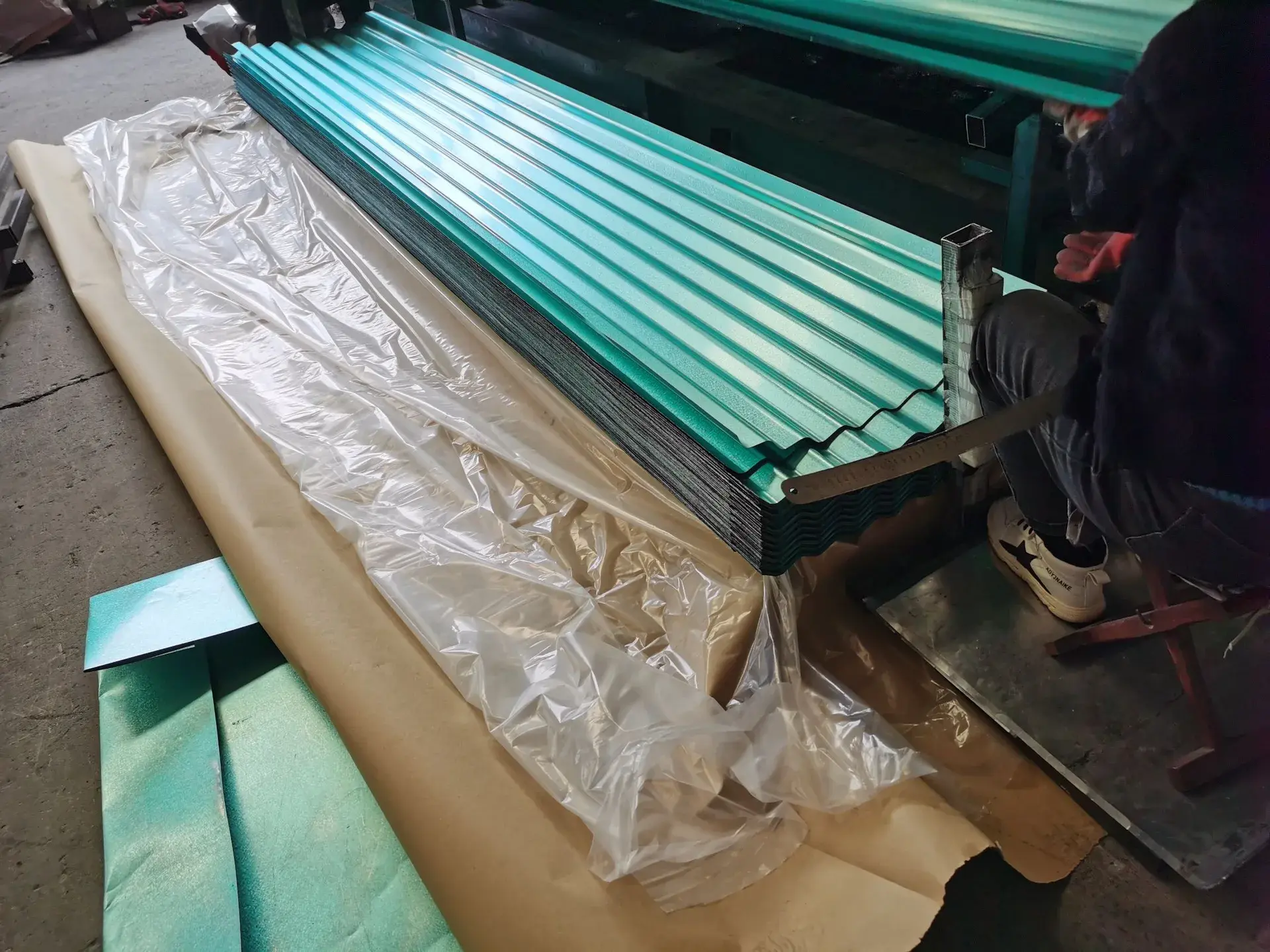
- Profile name/drawing, cover width, rib height, and length tolerance.
- Feedstock type: bare GI, bare GL, PPGI, or PPGL.
- Thickness basis (BMT vs total), width, and mechanical grade.
- Metallic coating designation (G/Z or AZ/AZM) with certificate requirements.
- For prepainted: resin system, DFT, color/gloss, reverse-side build, protective film if needed.
- Surface treatment for bare products: passivation/AFP/oil requirements.
- Packing: seaworthy, corner protection, and storage instructions for jobsite.
- Accessories list: fasteners, closures, sealants (neutral-cure where required), flashings of compatible materials.
Jobsite Handling Rules That Preserve Factory Quality
- Keep bundles dry and elevated; break plastic wrapping to ventilate if condensation is present.
- Lift, do not drag, sheets; use clean gloves on bare reflective surfaces.
- Remove steel drill swarf daily—carbon-steel filings rust and stain coated roofs quickly.
- Avoid copper, lead, and graphite contact or runoff onto GI/GL surfaces.
- Use specified fasteners and torque; overdriven screws create leaks and coating fractures.
- Design walkways if regular roof traffic is expected; hard soles burnish bare metallic finishes.
Key Takeaways
A steel roof is a system assembled from coil metallurgy, organic coating (optional), profile engineering, and installation discipline. Selecting GI vs GL vs PPGI vs PPGL should follow climate and edge-corrosion risk; selecting thickness and grade should follow span and wind; selecting paint should follow UV and aesthetic life; and site practice should prevent the moisture, swarf, and dissimilar-metal damage that no mill certificate can stop after delivery.
For corrugated, trapezoidal, or custom steel roofing sheets and matching coated coils, contact SUNSEA STEEL CO., LIMITED at [email protected] or WhatsApp +86 152 6555 2259 via https://wa.me/8615265552259.
Frequently Asked Questions
What materials are used for steel roofing sheets?
Common feedstocks are bare galvanized (GI), bare Galvalume (GL), prepainted galvanized (PPGI), and prepainted Galvalume (PPGL). Selection depends on climate, aesthetic needs, budget, and required service life at cut edges and fasteners.
Is Galvalume better than galvanized for bare metal roofs?
In many atmospheres, 55% aluminum-zinc (Galvalume) coatings provide longer atmospheric corrosion life than conventional zinc coatings at comparable construction designations, while zinc remains widely used and cost-effective in milder conditions. Project climate and detailing still dominate outcomes.
What thickness is typical for corrugated roofing sheets?
Market practice varies, but many residential and light commercial corrugated/trapezoidal sheets fall around 0.30-0.60 mm, with broader commercial ranges often spanning roughly 0.12-0.80 mm depending on profile, span, and local codes. Structural design should govern final thickness.
Why do stacked roofing sheets get white rust before installation?
Moisture trapped between nested sheets causes wet-storage stain. Rain-soaked packs, airtight plastic without ventilation, weak passivation on bare material, and long outdoor storage are the usual causes.
What causes paint cracking on profiled roofing ribs?
Tight forming radii on high-strength thin sheet, inflexible or overly thick topcoats, cold roll-forming conditions, and unvalidated tooling setups are common causes. Always trial-form production coils on the actual mill.
Which paint system should I choose for coastal steel roofs?
Higher-durability systems such as SMP, HDP, or PVDF are often preferred for UV and color retention, paired with adequate metallic coating mass (higher Z or AZ classes) and corrosion-resistant fasteners. Accessories and drainage design are as important as paint brand.
How should steel roofing sheets be stored on site?
Store bundles off the ground, under cover, with enough slope or ventilation to avoid trapped water. If plastic wrap traps condensation, open it carefully to dry. Do not leave unprotected packs in standing water or mud.